
| Reviews & Columns |
|
Reviews DVD TV on DVD Blu-ray 4K UHD International DVDs In Theaters Reviews by Studio Video Games Features Collector Series DVDs Easter Egg Database Interviews DVD Talk Radio Feature Articles Columns Anime Talk DVD Savant Horror DVDs The M.O.D. Squad Art House HD Talk Silent DVD
|
 DVD Talk Forum |
|
|
| Resources |
|
DVD Price Search Customer Service #'s RCE Info Links |
|
Columns
  


 
|
|
|
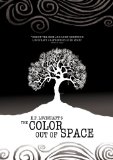
Color Out of Space
Other // Unrated // August 21, 2012
List Price: $19.95 [Buy now and save at Amazon]
The Movie:
Like the works of Phillip K. Dick and other authors with a cult following, the short stories of H. P. Lovecraft have been turned into movies many times over the years. And, as is the case with many authors, the results have usually been less than what they should be. (Two of the main exceptions are the great movies by the H.P. Lovecraft Historical Society, Call of Cthulhu and Whisperer in Darkness.) One of Lovecrafts best works, and also one of his most 'unfilmable' is The Colour Out of Space, a short story published in 1927. It was the basis for the films Die, Monster, Die! (1967 - 5.5 out of 10 at the IMDB), The Curse (1987 - 4.5 rating), and Color from the Dark (2008 - 4.6 rating), so when I heard an independent film maker in
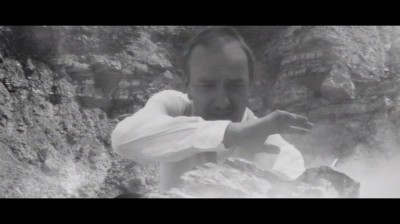
Set in 1975, young man named Jonathan Davis learns that his father has mysteriously disappeared. He starts tracking his parent's movements and the trail leads to
Once there he starts showing a picture of his father around to no avail until he bumps into a man, literally, who recognizes an old picture of the elder
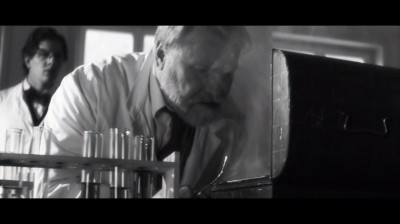
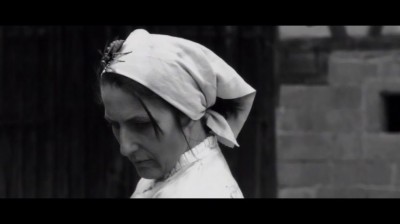
Back in the present, the older Armin takes Jonathan to his home where he relates the story of the Gärtener farm and the meteor that fell from space right before the war. It landed in their field one evening and the next day the fragment was still very hot. As a matter of fact, it didn't cool down at all. Soon a scientist from a nearby university came to get a sample, and but the material couldn't be identified. He returned and chipped off more fragments from the extraterrestrial rock only to discover that something is inside of the meteorite, an odd color. Before he can get a good look, it disappears, and later that night a storm comes and lighting is attracted to the rock "like moths to a flame." The next day it's gone, and the sample evaporate too.
Everyone forgets about the event until the following summer when the Gärtener's discover that their crops are growing to an enormous size. While they're gigantic, the food isn't good to eat, it tastes spoiled. While most families would rely on their neighbors to help them through such a tragedy, the Gärtener's do the opposite, becoming reclusive. Their kids stop going to school, and when Armin goes to visit them they act very odd. Soon word gets around that Mrs. Gärtener has gone mad, and her children start acting strange too. But nothing could prepare Armin for what he discovers when he goes to check on the family after a prolonged absence.
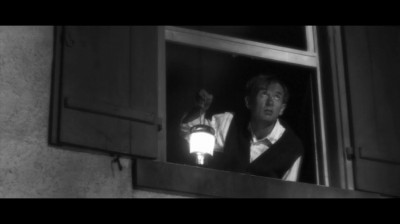
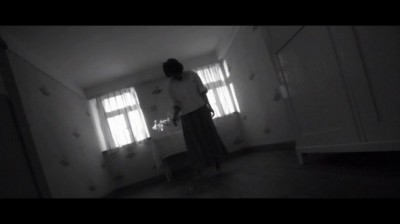
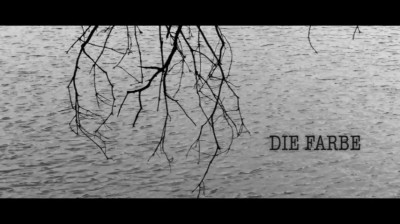
It's hard to create a movie where the creature is a heretofore unseen color, but the creators of this film manage to pull it off. There's a feeling of foreboding that permeates the film, and that's just what Lovecraft was going for in his story. By relying on atmosphere and creating an eerie feeling for the movie well before the 'monster' is first seen they draw the viewers into the story so that even if the reveal of the creature is a bit underwhelming, it almost doesn't matter. It's not what the thing from space looks like that is so scary, it's just the fact that it exists on Earth.
The cinematography is very good too and adds a lot to the movie. It's filmed in black and white (with the exception of the 'color' itself, which is a good and cheap effect) and the movie is filled with shadows and mist. The images are haunting. It creates almost a 'noir' feel to the film, where you're just waiting for something bad to happen. I especially liked the way jump-cuts were employed to show the way Mrs. Gärtener was going insane. Again, it's a cheap but effective tool if used correctly and it was in this film.
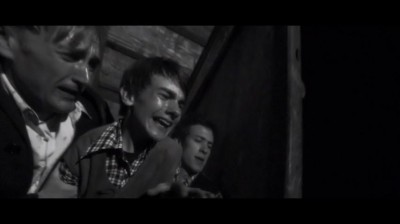

That being said, the director made some unusual choices for this movie. While the large majority of them work, I had to wonder why he created the whole framing sequence of an American man looking for his father in
Purist and hard core fans of Lovecraft's work will bemoan some of the other changes that were made to the story, including one at the end. I happened to love the twist that's included near the conclusion. It both surprised and shocked me, which doesn't happen often.
The DVD:
Audio:
The disc comes with both a DD 5.1 mix as well as a stereo soundtrack, both in German with optional English subtitles. One thing to note is that the movie starts in English but soon turns to mainly German once the narrative switches to
Video:
The black and white anamorphic image looks good. It's just a tad soft in places, and there is some banding in a few scenes, but aside from that the picture quality is fine, especially for an independent film.
Extras:
The disc comes with more extras than I was expecting. There are three featurettes on the disc, Making of Colour Out of Space which, as one would expect, covers the filming of the movie, Effects and Concepts, which looks at how they achieved the look of the film on a limited budget, and Science and Horror, which talks about Lovecraft's use of science to generate terror. All three are nice additions to the DVD and worth checking out.
Final Thoughts:
All in all, this is a magnificent film. Eerie and haunting with some excellent cinematography, it is one of those rare films based on a Lovecraft story that manages to capture the feelings and atmosphere that the author was trying to create. Horror fans who are only looking for grue and blood should pass it by, but those who enjoy chilling movies told well should definitely check this out. Highly Recommended.
|



| Popular Reviews |
| Sponsored Links |
|
|
| Sponsored Links |
|
|
| Release List | Reviews | Shop | Newsletter | Forum | DVD Giveaways | Blu-Ray | Advertise |
|
Copyright 2024 DVDTalk.com All Rights Reserved. Legal Info, Privacy Policy, Terms of Use,
Manage Preferences,
Your Privacy Choices 
| |||||||