
| Reviews & Columns |
|
Reviews DVD TV on DVD Blu-ray 4K UHD International DVDs In Theaters Reviews by Studio Video Games Features Collector Series DVDs Easter Egg Database Interviews DVD Talk Radio Feature Articles Columns Anime Talk DVD Savant Horror DVDs The M.O.D. Squad Art House HD Talk Silent DVD
|
 DVD Talk Forum |
|
|
| Resources |
|
DVD Price Search Customer Service #'s RCE Info Links |
|
Columns

|
|
|
Mighty Morphin Power Rangers: The Complete Series
Time Life // Unrated // November 20, 2012
List Price: $219.95 [Buy now and save at Timelife]
The Show:
The Mighty Morphin Power Rangers arrive on DVD in R1 at last. I'm one of the people who have been waiting for a set like this, having first watched the show as an adult with my oldest son when it originally aired. I still remember flipping stations after
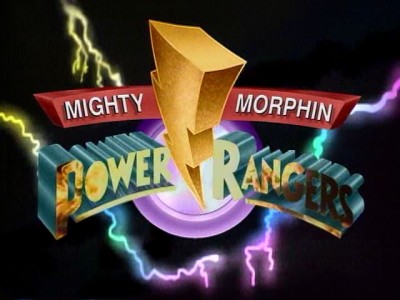

So we started watching the show. Every day. And rearranging our schedules so that we wouldn't miss it. And taping it on VHS when we couldn't get out of an appointment. Yes, we were hooked. After a year or so Joe and I were joined by a new addition to the family, my youngest son Alex. All told the three of us watched the show on a fairly regular basis for about a decade. My sons grew up with the Power Rangers, in all their various incarnations.
Over the years before Mighty Morphin Power Rangers started airing I had often wondered why more Japanese children's shows weren't dubbed for American audiences. After all, Ultraman was exciting and the kids in my neighborhood watched it religiously. It turns out that the answer is because there's a larger cultural gap than one would expect. More than a few of the plots deal with monsters and creatures that American audiences wouldn't recognize and the plots were more convoluted. So these shows, though immensely popular in
Enter Haim Saban. While he was between business meetings in
The first seasons of Mighty Morphin Power Rangers were adapted from the Japanese program Kyouryuu Sentai Zyuranger (Dinosaur Squadron BeastRanger). The original version dealt with a 170 million year old wizard who, with the help of five equally old Holy Warriors of Justice, was battling an evil witch who had sold her soul to Satan and killed off the dinosaurs.
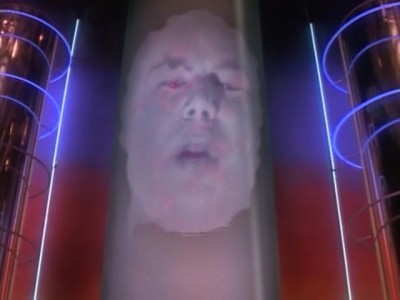
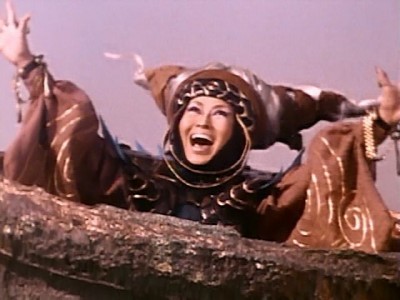
In the Americanized version, astronauts exploring the moon find something that looks like a "space dumpster" and by opening it release Rita Repulsa, a witch who had been imprisoned for 10,000 years. Along with her newly freed henchmen she sets her sights on conquering the Earth. Luckily, Zordon, the being who locked Rita away all those years ago and was sent into a time warp while doing it, senses that she's free and orders his robot, Alpha-5 to recruit "five teenagers with attitudes" to defend the planet.
Alpha selects a group hanging out at the local juice bar and gym: Jason, a tough leader and Karate instructor, Kimberly, a cheerful Valley-girl type, Trini, the quite and poised young woman who also has brains, Zach, another martial arts enthusiast, and Billy, the intelligent bookworm who is more at home in a lab than fighting monsters. This group is transported to Zordon's hidden command center and the teens are given 'power morphers' which will transform them into strong fighters as well as allow them to each command a 'zord,' a large dinosaur-shaped robot. When they need even more power, the zords can be joined together to form a megazord, a very formidable fighting machine in the shape of a giant humanoid.
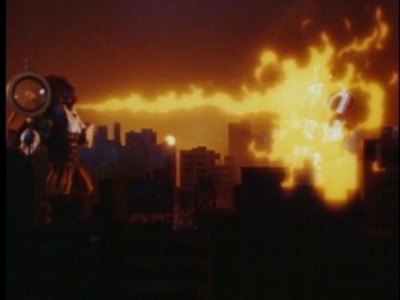
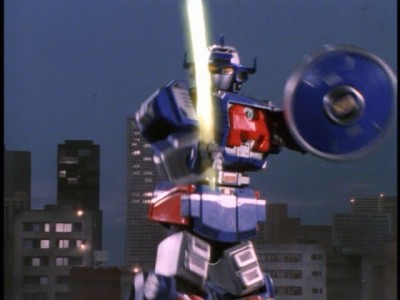
That sets up the basic formula for this series as well as the other Power Ranger seasons. The kids will have some simple kid/teen problem to solve: overcoming a fear, working together, making friends, and the like. Meanwhile, on the moon, Rita hatches a plan that involves sending a monster down to Angel Grove, the city where the Rangers live along with a group of Putties, weak foot soldiers made out of clay. They attack the Rangers in their civilian forms, and when the teens get overwhelmed one of this shouts out "It's morphin time!" and they all transform by yelling out the name of their dinosaur zord.
Beating off the attack, the Rangers get a chance to work on their problem a bit before the monster attacks again. The Rangers win again, but this time Rita casts a spell and makes the creature grow to a giant size. The Rangers call upon their Zords, fight a bit, form the Megazord, and finally save the Earth. Back in their civilian garb they solve their problem and usually end the show at the juice bar downing a nutritious, healthy, and tasty glass of fruit or vegetable juice. Yum, yum.
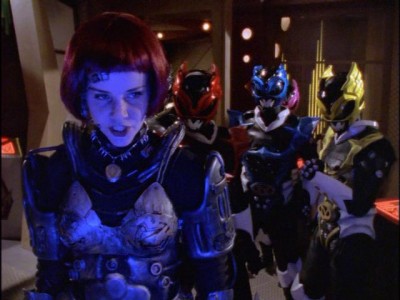
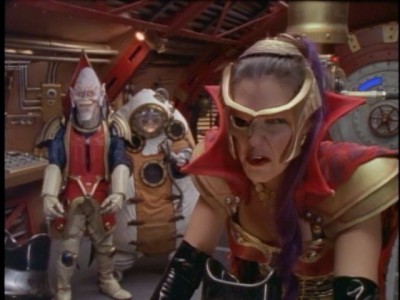
Yes, it's formulaic and the vast majority of episodes are stand along monster-of-the-week shows, but that doesn't mean there isn't some continuity. Most of the seasons have an over reaching larger story arc and there are missions inside each series that advance the plot. That goes a long way to keeping the show interesting.
The first major plot change occurred because of changes in the Japanese counterpart that no one realized were going to take place. One of the staff had the job of editing episodes of Kyouryuu Sentai Zyuranger to extract the monster fights as well as any extra generic footage or crowds or street scenes that could be incorporated into episodes of Power Rangers. After the show started airing it was discovered that there weren't five Rangers in the original, a sixth was added part way through the series. This caused a panic. They needed to cast another actor and come up with some way to introduce him to the show. That led to the five-part Green with Evil storyline that aired early in the first season and introduced Tommy as the Green Ranger.
In the second season, Lord Zedd, Rita's superior, arrives and throws her back into the space dumpster since she's been doing such a horrible job of conquering the Earth. He ups the ante and starts to target the Green Ranger, eventually trapping him and taking away all of his power, permanently! I still remember how surprised my son was at that twist. (Don't worry, while Tommy is no longer the Green Ranger, he still plays an active part in the series.) This season also sees the first change in the Power Ranger line up. When three of the actors held out for more money (it was the most popular children's show on TV after all) the production company decided to replace them instead of upping their salary. This resulted in Jason, Zack and Trini leaving and three new Rangers joining the team, something that would happen on a fairly regular basis from here on out.
In the third season Rita's brother, Rito Repulsa, arrives on the scene and destroys their zords and their power coins (which allow them to morph). This starts a quest to find Ninjor the being who created the power coins in the first place. At the end of season three, Rita and Rito's father, Master Vile, shows up and uses the Orb of Doom to turn back time and change the Rangers into children.
This leads to a 10-part miniseries (included in this collection) Mighty Morphin Alien Rangers where Zordon calls on Ranger from the planet Aquitar to aid earth. They help, but this the battle escalates which results in a devastating loss for the Ranger. This adventure leads into the next Power Ranger series (they'd come up with a new series every season from now on) Power Rangers Zeo!
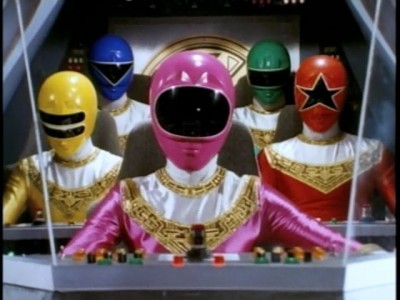
In Zeo, a new threat faces Earth, the Machine Empire. These evil robots are so villainous that Lord Zedd and Rita Repulsa flee from the moon rather than face them. With a new Ranger (gold) new Zords, eventually the introduction of super zeozords, the Rangers have a lot on their side, but the threat they face is mighty, and the return of their old foes, Lord Zedd and Rita means the outcome is anything but certain.
After Zeo concluded, the second film, Turbo: A Power Rangers Movie was released and is part of the show's continuity (as opposed to the first film which did not fit in with the TV show). It's not included with this set, but you will find the entire the fifth season, Power Rangers Turbo. This series sees the introduction of the first kid to be a Power Ranger, Justin, who played the Blue Ranger. Since he was so young (and to match the Japanese footage) Zordon gave him the power to turn into an adult when he morphed.
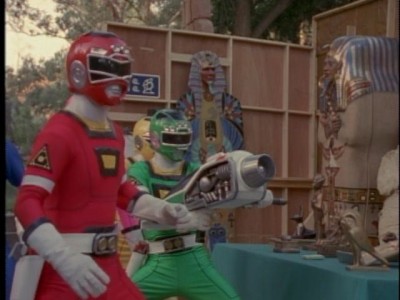
This is the series where the show started to go down hill. The addition of a 12-year-old character, forced on Saban by the Fox executives, was a dumb move, but it got worse when the show introduced Alpha-6, a jive-talking robot. Every scene he's in is painful to watch. The villain for this season, Divatox, was way too over-the-top too, which is saying something a lot.
On top of all of those problems, the entire Ranger line up (with the exception of the young Justin) was replaced in favor of new actors. Taken all together, this season is one of the weakest in the franchise.
Things get much, much, better in the sixth season, Power Rangers in Space. This is one of the very best seasons of the show. The outer space theme helps a lot, as does the more serious tone of the show and the larger-than-life scope of the series. The biggest improvement is that this season is a series has a lot of continuity. Each show leads into the next one, and they bring back a lot of characters who made appearances in the earlier seasons.
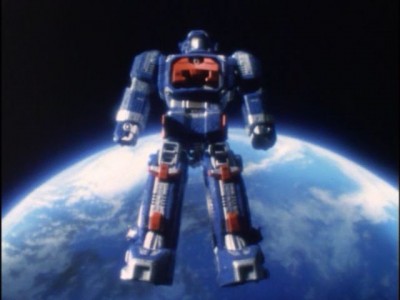
The plot is pretty epic too. The space villain Dark Specter has captured Zordon and is draining his power. The Turbo Rangers take off in a borrowed space shuttle to search for him and along the way encounter the Red Space Ranger Andros who gives them (eventually) Astro Morphers as well as turning their shuttle into the Astrozord. But this has brought them to the attention of Dark Specter and the Princess of Evil, Astronema. This season also sees the introduction of my favorite Power ranger villains, the Psycho Rangers. These five robotic evil Rangers are more powerful than the Space Rangers but also practically insane. They're delightfully evil and make for some of the best episodes in years.
This season also wraps up the original Mighty Morphin Power Ranger story. Since the very first episode there has been a thread of a story with Zordon fighting evil in the galaxy. Though the Power Rangers have changed, zords have been created and destroyed and the main villains come and go, up until this point the series has been telling one long story. It all comes to a dramatic and exciting close in the final two-part episode Countdown to Destruction. In this epic tale Dark Specter, with Zordon almost drained of all of his energy, gathers together all of the evil villains in the universe and launches an all out attack on everything. All of the Rangers from other planets are attacked at once, and things go very badly for most of them. Earth is conquered. It looks like the beginning of a dark era, but there's still some fight left in the Power Rangers. This was one of the best conclusions to a children's show ever, an epic battle full of defeat, victory, and sacrifice. It's a great way to end the show.
And that's what the creators thought they were doing when the show was first plotted out. The ratings on Power Rangers Turbo were pretty wretched, and if Power Rangers in Space didn't improve, the show was certain to be cancelled. The rating did go up however, significantly. Instead of the show being cancelled, more episodes were ordered. That was a bit of a problem since everything had been wrapped up at the end of season 6.
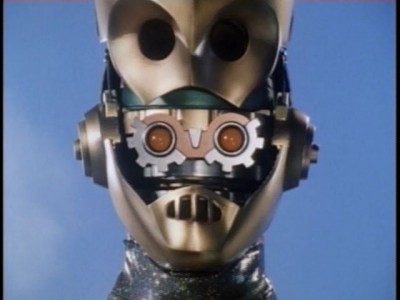
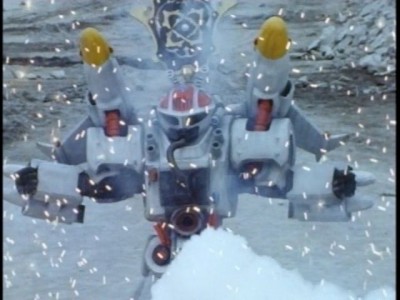
Power Rangers Lost Galaxy is a bit different from what came before. It's distinctly separate from the first six Power Rangers seasons, except when it isn't. It takes place in the far future, where a group of colonists depart from Earth in a space ship to look for an Earth-like planet. Somehow Bulk, the comic relief first introduced in the very first episode of Mighty Morphin Power Rangers, is on board too, which caused some head-scratching at my house. An entirely new group of teens find five Quasar Sabers that allow them to morph along with sentient zords, known as Galactabeasts. They use their newfound power to defend the space ship from a series of space villains.
It was hard to get into this show, especially after the high points of the last season. It's a so-so season and the point where my boys decided the show had jumped the shark. From here on out the various Power Ranger seasons would all be stand alone stories (thought they'd have a team-up adventure or two every year where an old group of Rangers would arrive to help fight a villain, something that started with Lost Galaxy.
So, seeing chunks of this show again after a number of years, how does it hold up? Very well actually. The program was never great drama, but it did fill a nice niche and it still does today. Power Rangers is a cross between an action flick and the light tween comedies that the Disney Channel shows currently. There's a good amount of flash and style, some great catch phrases, and just a tad of humor (which still falls as flat today as it did 20 years ago.) For young kids, or adults who truly embrace their inner nerd, it's still fun and a great view.
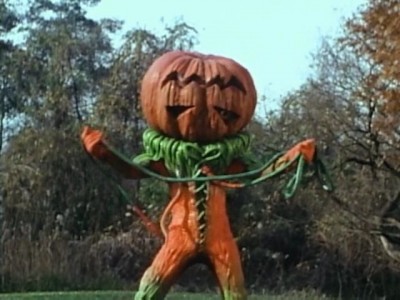
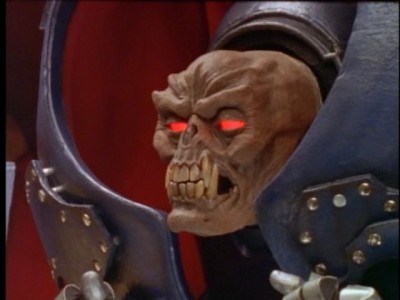
Having said that, it is hard to ignore the silly parts of the show and make no mistake, there are a lot of goofy aspects. Due to the way the show was created, they had to use the monsters from the Japanese show and a lot of those were absurd rather than being scary. Pudgy Pig is a giant hog head in a helmet with arms and legs who eats everything in sight (it's said he'll eat the Earth entire food supply in 48 hours). He's absolutely wonderful compared with the Pumpkin Rapper, a guy with a pumpkin head who raps while he wraps vines around his opponents. Get it? He raps and wraps and he's the Rapper.
Then there are some of the poor plot devices. When three of the original Rangers left the show over a pay dispute, they were written out in a particularly clumsy manner. Using only recycled footage, the show related how the trio were selected to represent Angel Grove in the Teen Peace Summit in
Still, things like that are what makes the show so fun. Yeah it's goofy but it's also cool. The whole show is about Giant monsters battling teens in robots (and dinosaur robots in some seasons). How cool is that?!?
The DVD:
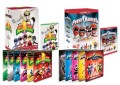
The first seven seasons arrive in two boxed set. The first slipcase contains all three seasons of Mighty Morphin Power Rangers, while the second includes Power Rangers Zeo, Power Rangers Turbo, Power Rangers in Space, and Power Rangers Lost Galaxy. All together the set consists of an astounding 338 episodes on 37 DVDs with another three discs reserved for extras. It's a very impressive collection.
Audio:
The stereo soundtrack presents the show as it originally aired, without as much fanfare and pizzazz as the show probably deserved, but serviceable. There aren't a lot of low frequencies, which is too bad because the explosions would be more impressive if they had a bit more punch aurally. That said, the dialog is clean and there aren't any common audio defects.
Video:
The full frame image is actually pretty good. The show has a bright design with a lot of intense colors and these come across quite nicely. The lines are tight and the level of detail is fine. It's a solid looking show, even when seen on a large screen display. The only real complaint is that some of the Japanese footage isn't as crisp as the rest of the show, but it's a minor complaint.
Extras:
Time-Life and Shout! Factory have assembled a truly impressive collection of bonus material for this set. The discs with the shows themselves are bare bones affairs, but there are a total of three DVDs devoted to extras, all of which are crammed with newly created featurettes as well as rare and little seen Power Ranger specials.
The fun starts off with Morphin Time, a 32-minute look at the creation of the show and the early years. Various Rangers, directors, and writers discuss the program and how phenomenally successful it was. Haim Saban tells how he came up with the idea and relates how he had to shop the show around for eight-years in order to get it picked up. (After the 8-week contract was signed with Fox, all of the execs who saw the pilot hated it and Saban was told, before it even aired, that it would be cancelled after the 40 episodes run was over.)
There are some great anecdotes too about the filming and promotion of the show too. Early on it was decided that the Rangers would hold a press appearance at Universal Studios in LA and, since they were doing that, they scheduled an extra show for the public in a 400 seat theater. The day before the appearance they moved them to the largest auditorium they had, as tens of thousands of people were requesting tickets. They did 6 shows in a 6000 seat venue, and still had to turn away tens of thousands of fans. It was the first time that Universal Studios closed, they were over capacity, and so many people continued to flood in from all areas that the highway patrol had to close the freeway exits that lead to the amusement park. That in turn created a traffic jam that stretched 10 miles. Pretty impressive for just 5 teenagers with attitudes.
A Morphenomenal Cast run 35-minutes and looks back at the actors who played the rangers with David Yost, Walter Emanuel Jones, Jason David Frank, Paul Schrier, Jason Narvy and others reminiscing about their co-workers. They talked a lot about the grueling shooting schedule as well as the popularity of the show. Since many of the actors are still working in show biz, the comments are just about all positive. There is one mention made that Austin St. John (the original Red Ranger) didn't get along Jason David Frank (the Green/White Ranger) but it's glossed over as is anything that might be controversial. I wish the had talked about the departure of three rangers at the end of season two, and David Yost's claims that he left the series because of harassment due to his sexual orientation. Neither of these are touched on though.
In addition to the new featurettes there are some vintage specials that are very rarely seen. Lord Zedd's Monster Heads (25-minutes) and The Good, the Bad, and the Stupid (52-minutes) are direct-to-video shows that consist of a series of clips form the show held together by a framing device. Alpha's Magical Christmas runs for 23-minutes and that's about 22-minutes too long. It's another direct-to-video offering meant that was thrown together. Basically, Alpha-5 sings Christmas carols. That's about it. Let us move along.
Something that even a lot of hard core fans probably haven't seen is the video that you received if you joined the Power Rangers Fan Club back in the early days. The half-hour long reel features interviews with the original cast, and behind the scenes footage. It was much better than I was expecting.
The White Ranger Kata is the second installment of the direct-to-video series MMPR Karate Club. In this 40-minute lesson, White Ranger and real-life martial arts expert Jason David Frank teaches young kids a series of moves along with discussing the proper use of Karate.
There's also something that I didn't know was recorded: The Power Rangers Live stage show. At the height of the original line-ups popularity a stage show was created that toured the country. The actors from the show don't appear, they just recorded their dialog and only 'appeared' in costume with their masks on. I remember when this was touring, and my oldest son was upset that it didn't appear in a city near us.
Next up is Tales of the Giant Banana: A Look Back at Bulk and Skull (22-minutes) features actors Paul Schrier and Jason Narvy discussing their roles on the show, ironically some of the longest running characters in program's run. Behind The Mask: Celebrating the Stunt Team talks with some of the stunt people as well as the stunt coordinator who filmed many of the more challenging scenes.
There's a look at a fan-run MMPR convention in A Convention with Attitude: Power Morphicon too, but more interesting are a pair of TV special that only aired once. 1998's Power Playback: Power Rangers Funniest Moments is a clip show hosted by the original Blue Ranger, David Yost, and Power Rangers: The Lost Episode has Austin St. John and Walter Emmanuel Jones presenting the original pilot for the show that never aired.
The on-disc extras are rounded out by a half-hour sneak-peek to Power Rangers Zeo and a couple of promo spots.
But wait, that's not all! There are also two booklets included with the set. Both contain a brief introduction, episode listings, character bios and more.
The only thing that's really missing are commentary tracks from the stars. I would have enjoyed hearing the cast reminisce a little bit more, especially those actors who weren't included in the featurettes. Of course, if they weren't willing to appear on camera, I doubt that they'd do a commentary track.
Final Thoughts:
I watched all of these when they originally aired (and spent a small fortune on the toys for my sons). Revisiting them I found them just as fun, goofy, exciting, and action-packed as ever. If you have fond memories of rushing home from school to see what monster Lord Zedd would send to Earth next, you'll have a great time with this set. Add to that the solid A/V presentation and the absolutely magnificent set of extras and this collection earns the coveted DVDTalk Collectors Series rating.
|



| Popular Reviews |
| Sponsored Links |
|
|
| Sponsored Links |
|
|
| Release List | Reviews | Shop | Newsletter | Forum | DVD Giveaways | Blu-Ray | Advertise |
|
Copyright 2024 DVDTalk.com All Rights Reserved. Legal Info, Privacy Policy, Terms of Use,
Manage Preferences,
Your Privacy Choices 
| |||||||