
| Reviews & Columns |
|
Reviews DVD TV on DVD Blu-ray 4K UHD International DVDs In Theaters Reviews by Studio Video Games Features Collector Series DVDs Easter Egg Database Interviews DVD Talk Radio Feature Articles Columns Anime Talk DVD Savant Horror DVDs The M.O.D. Squad Art House HD Talk Silent DVD
|
 DVD Talk Forum |
|
|
| Resources |
|
DVD Price Search Customer Service #'s RCE Info Links |
|
Columns
  


|
|
|
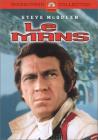
Le Mans
MOVIE
Steve McQueen went bankrupt creating this film and sold off his interests in the movie to get out of debt. It also failed at the box office. But since then, it has achieved cult status through the years and this classic auto-racing movie starring Steve McQueen as Michael Delaney is one which fans of motor racing are sure to appreciate.
"Le Mans" puts you in the driver's seat of the most famous and exciting motor race in the world, the Le Mans 24-hour, set in the French countryside of La Sarthe. This was an era when the 8.5 mile circuit was exceptionally fast and dangerous and prior to the period when sponsors and their images were emblazoned on everything from posters to popsicle sticks. This 1971 film from the 1970 race, refreshingly recreates the time when such sponsor displays were more subdued and the focus was primarily on the contestants, the machines and the setting. In "LeMans", you can almost smell the racing fuel and burning rubber. In it people interact with each other, yelling over the wail of the engines, getting their hands dirty instead of like today where watching high tech monitors, talking over noise canceling mics and headsets, and tuning cars by sending a signal to an onboard computer. And that helps make the movie feel real, without the high tech antiseptic feeling.
"LeMans" is about racing. It is a racing fan movie with a thin plot revolving around romance. Thin because there was no script, not even an outline. But the movie doesn't suffer because of it. A European driver and his wife consider now is the time for his retirement while an American racing star Michael Delaney (Steve McQueen) is returning to the race where he was injured in an accident one year before. He finds himself drawn to the widow (Elga Andersen) of a racer who was killed in the same accident. Out on the track, Delaney battles not only the competitors but also the haunting memory of causing an accident and the death of her husband. This is a solid character driven sub-story effectively embedded in a movie for racing fans.
More than a half hour goes by before McQueen speaks his first line of dialogue. It's amazing how effective this technique is in the movie, helping you become much more in tune with the sights, sounds and environment surrounding a major racing event. This heightens the sense of anticipation as the race nears its start. Drivers are in the cars, turning knobs and throwing switches in time to the pounding sound of a heartbeat sound.
The cinematography is incredible. Director John Sturges , who had worked with Steve McQueen before in "The Great Escape" declined the project and was replaced by Lee Katzin, fresh off his TV works of "Wild Wild West", " Mission: Impossible", "The Rat Patrol", "Mannix", "It Takes A Thief" and "The Mod Squad".
Car mounted cameras give us wonderful views of the Mulsanne Straight, the switch backs of Arnage, the Essess and Maison Blanche. Steve McQueen's own Porsche 908 was entered in the 1970 Le Mans race in order to get the amazing on-track shots. Forty five actual race drivers, including McQueen himself, pilot the wheels of the Gulf sponsored Porsche 917 and other cars at over 200 mph during the spectacularly filmed sequences. The best race cars of the period are featured in exciting duels and bone-jarring crashes where the death throws of the vehicles are detailed by masterful use of stop-action. The racing teams of Porsche and Ferrari were heavily involved and consulted during its filming. Every few hours during this 24 hour race, the team drivers alternate driving duties, which leaves Michael free to do some conversing outside of his driving duties. Creative use of camera angles and visuals without sound during conversations add to the suspense of those encounters. But these relationships are only secondary to the main one for the movie, and that is the duel between the German driver Stahler in a Ferrari 512LM/S and the American Delaney Team in the Gulf sponsored Porsche 917 that concludes in an amazing last lap battle between the two.
In today's world of generous CGI effects, we probably won't see a another true racing movie as realistic as this one. Here, the track is real, the drivers real, the cars (including a Porsche 917, Ferrari 512LM/S, Ferrari 312P and Lola T70) are all real. With nothing fake or substituted, no rear projection tricks, it's refreshing to watch this docudrama detailing the greatest of all endurance races. And it does a great job of it.
DVD
Studio: Paramount Home Video
Theatrical Release Date: June 23, 1971
DVD Release Date: April 29, 2003
Run Time: 108 minutes
Widescreen anamorphic - 2.35:1
DVD Encoding: Region 1
Available Audio Tracks: English (Dolby Digital 5.1), English (Dolby Digital 2.0 Stereo), French (Dolby Digital 2.0 Mono)
Available subtitles: English
VIDEO
A very good effort that is clean and solid. Good blacks, few artifacts. Nice presentation.
AUDIO
Crank it up. Typical 70's high frequencies, accentuated by the raspy sounds of the race engines. If you have EQ, bump up the low end a bit, but it's certainly acceptable and enjoyable if you don't. Good surround effects.
MENU
? Play
? Setup
Audio Options
- English 5.1 Surround
- English Dolby Stereo Surround
- French (Mono)
Subtitles
- English
- None
? Scene Selection
- 12 selections, three pages of 4 with thumbnails and caption
BONUS MATERIALS
None.
SUMMARY
Still the most authentic racing movie ever made that really captures the excitement, atmosphere & environment of a great international motor race. Any racing fan should have this in their video collection.
|



| Popular Reviews |
| Sponsored Links |
|
|
| Sponsored Links |
|
|
| Release List | Reviews | Shop | Newsletter | Forum | DVD Giveaways | Blu-Ray | Advertise |
|
Copyright 2024 DVDTalk.com All Rights Reserved. Legal Info, Privacy Policy, Terms of Use,
Manage Preferences,
Your Privacy Choices 
| |||||||