
| Reviews & Columns |
|
Reviews DVD TV on DVD Blu-ray 4K UHD International DVDs In Theaters Reviews by Studio Video Games Features Collector Series DVDs Easter Egg Database Interviews DVD Talk Radio Feature Articles Columns Anime Talk DVD Savant Horror DVDs The M.O.D. Squad Art House HD Talk Silent DVD
|
 DVD Talk Forum |
|
|
| Resources |
|
DVD Price Search Customer Service #'s RCE Info Links |
|
Columns
  


 
|
|
|
High Society
THE STRAIGHT DOPE:
Movies today don't know from sexy. For all the huffing and puffing of your Umas, Charlizes, and J.Los there's a distinct lack of fun. While Grace Kelly's appearance was as carefully manufactured and marketed as any of today's starlets, her fiercely funny energy was leagues ahead of any modern competition. Given material as perfect as John Patrick's script (based on Philip Barry's play "The Philadelphia Story") and surrounded by a veritable hall of fame filled with co-stars, Kelly takes center stage and creates one of the most memorable performances from the golden age of Hollywood.
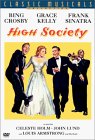
High Society is cinematic catnip. The story reads as minor as can be: Tracy plans her second wedding to respectable but boring George (John Lund). Meanwhile, the neighbor to her family's sprawling Newport home, her ex-husband Dexter (Bing Crosby), is still deeply in love with her, although he's far too cool to embarrass himself by begging. Instead he does something infinitely better: He volunteers his home as rehearsal space for Louis Armstrong and his band. Eventually, Frank Sinatra joins the fun as well, as a journalist covering the wedding.
The story itself is fun and breezy with Tracy falling for Frank and then re-falling for Bing, while innumerable subplots and side-characters are all winning. Celeste Holm is terrific as Sinatra's journalist partner while Louis Calhern is hilarious as the slightly dirty old uncle Willie. Special note belongs to Lydia Reed as Tracy's precocious little sister Caroline who understandably (but unfortunately) disappears for much of the movie's boozy late night reverie. When your movie is designed to swing from one champagne-soaked party to the next you'd better stack the deck with talent like this.
Just as the script and cast add tremendous strength to the simple story, so do most technical aspects. While director Charles Walters frames much of the film in wide and medium master shots (close-ups are rare in this true VistaVision film) the cinematography is still pretty great. Although fans of the stars might long for more glamorous close-ups this isn't some pin-up parade. Shots are designed to soak up the lush production design and dazzling colors. Fans of the great films Kelly did with Hitchcock (including the super-fun To Catch a Thief and the so-perfect-I-could-cry Rear Window) might miss some of the perverse complexity of Edith Head's costume design. Helen Rose's isn't quite as weird but it does feature a few key pieces, like Kelly's Greek goddess bathing gown and plenty of killer party dresses.
Perhaps the most celebrated aspect of the film is its music. The original Cole Porter tunes are all enjoyable and some of them are downright classics. Sinatra and Holm duet on on hilarious "Who Wants to be a Millionaire?" while another Sinatra duet (with Crosby) on "Well, Did You Evah?" is the stuff of legend. (Watch the little stutter-step they do in unison at the end.) Some of the pieces are so clever and sharp, both musically and lyrically, that it can practically make you feel light-headed.The big hit from the film was "True Love," sung by Crosby with a lovely assist from Kelly and, while it's nice, the more raucous numbers have aged better.
The film's treatment of Armstrong is a bit more complicated. He's obviously been shoe-horned in by the filmmakers who no doubt loved his brilliance. As one of the two or three most important American artists of the last century, Louis Armstrong's influence and importance far surpass anyone else in the film (with only Sinatra even getting in the ball-park, but posing no competition.) Yet in the film he's marginal, acting like an occasional Greek chorus. He's great fun and is obviously having a blast, even if he's basically playing the help. His duet with Crosby on "Now You Has Jazz" might have been condescending or worse if not for the obvious respect the men had for each other and the brilliant energy of Armstrong's performance. While High Society is an important landmark in the careers of most of it's impressive ensemble, for Armstrong it's a footnote; A fun side-project that can hopefully introduce his genius to new audiences.
VIDEO:
The anamorphic transfer is quite impressive. Re-mastered for this disc, it shows a bit of age but far surpasses my expectations. The unusual VistaVision compositions (as I mentioned, very few close-ups) caused a good deal of lost detail on my modest set but the opportunity to see this handsome film in its full aspect ratio was worth the compromise.
AUDIO:
The soundtrack is available in Dolby Digital 5.1. It shows the limitations of the source material, as virtually all older films that have been re-mastered do, but it has great range and kick. Porter's songs sound terrific and the dialog is crisp and clear. Subtitles are available in English, French and Spanish and a dull-sounding French mono track is also available.
EXTRAS:
The disc contains a number of extras including a curious feature called "Cole Porter In Hollywood: True Love." Hosted by Celeste Holm this new piece isn't just a look at Porter's contribution to the film but also the entire process. It also contains Holm's reminiscences on the project, which are nice since she's the biggest name in the film still living. The disc also features a period newsreel, a CinemaScope Droopy cartoon, some fun radio ads for the film and trailers for both High Society and Philadelphia Story.
FINAL THOUGHTS:
High Society is just classic Hollywood doing what it does best. The core of the story is forgettable but the performances, the music, the dialog and the technical elements are all so top-notch that it's unmissable. And the sheer sexiness of the thing is incredible. A joy to watch.
|



| Popular Reviews |
| Sponsored Links |
|
|
| Sponsored Links |
|
|
| Release List | Reviews | Shop | Newsletter | Forum | DVD Giveaways | Blu-Ray | Advertise |
|
Copyright 2024 DVDTalk.com All Rights Reserved. Legal Info, Privacy Policy, Terms of Use,
Manage Preferences,
Your Privacy Choices 
| |||||||