
| Reviews & Columns |
|
Reviews DVD TV on DVD Blu-ray 4K UHD International DVDs In Theaters Reviews by Studio Video Games Features Collector Series DVDs Easter Egg Database Interviews DVD Talk Radio Feature Articles Columns Anime Talk DVD Savant Horror DVDs The M.O.D. Squad Art House HD Talk Silent DVD
|
 DVD Talk Forum |
|
|
| Resources |
|
DVD Price Search Customer Service #'s RCE Info Links |
|
Columns
  


|
|
|
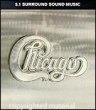
Chicago: Chicago II (DVD-A)
Though the title is printed on cover and spine as simply "Chicago," this album is generally known as "Chicago II," the eponymous group's second album. (Apart from the first album, Chicago Transit Authority, and the twelfth, Hot Streets, Chicago has stuck with the minimalist tradition of simply numbering their albums sequentially.) With a continuous career stretching over more than thirty years, Chicago has quite a history in the music world, with many hit singles; Chicago II offers a look back at some of the early, distinctive music that got the group started.
Listeners who are only familiar with Chicago's pop hits with Peter Cetera as the lead singer will be very surprised by the experimental-sounding tracks in Chicago II. This 1970 release has Chicago blending Beatles-inspired rock with the "Big Band" and jazz sounds; the use of horns as a major musical element in the songs. This distinctive style would continue to appear in later albums as well, but to a lesser degree as the group entered the 1980s and 1990s.
Personally, I first encountered Chicago in album #17, and had worked my way backward, picking up the older releases mainly in that now-antiquated format, the record. The lack of a record player in my college dorm room put a damper on my exploration of Chicago's earlier records, so the only songs from Chicago II that I knew were ones that made it onto their Greatest Hits compilations: "Color My World" and "25 or 6 to 4."
The unconventional approach that Chicago took to its second album is clear in the way that the album is largely made up of two long pieces, deliberately echoing classical compositions: "Ballet for a Girl in Buchanan" and "It Better End Soon." The individual songs were in fact only given names by the group's producer, and in another sign of how little the group was thinking of conventional singles, even many of the individual songs are longer than the typical 3-minute length for radio play.
My pick for the standout track on this album is certainly "25 or 6 to 4," a slightly psychedelic-sounding song with Cetera in lead vocals, with the horns playing a part but not dominating as they do in the other tracks. None of the other songs really grabbed me; the jazz/Big Band-inspired sound that dominates the album as a whole just isn't the flavor of Chicago that I really like.
Playlist:
Movin' InThe Road
Poem for the People
In the Country
Wake up Sunshine
Ballet for a Girl in Buchanan (tracks 6-12)
Make Me Smile
So Much to Say, So Much to Give
Anxiety's Moment
West Virginia Fantasies
Color My World
To Be Free
Now More Than Ever
Fancy Colors
25 or 6 to 4
Prelude
A.M. Mourning
P.M. Mourning
Memories of Love
It Better End Soon (tracks 19-23)
1st Movement
2nd Movement
3rd Movement
4th Movement
Where Do We Go from Here
While the music is playing, we get are a series of static photographs of various band members playing, "artistically" captured in colored light (actually, they're fairly ugly photos). The image quality is fine for its purposes, and is presented in a 1.33:1 aspect ratio.
The DVD
Audio
The audio quality of the Dolby 5.1 track on Chicago II is nothing short of fantastic. The sound is rich and full, with a beautiful natural sound in both instruments and vocals. It's utterly pristine as well, with the soundtrack offering superb clarity and a clean background for the music. The 5.1 channels of Dolby sound are used to perfection: the spatial separation is outstanding, with different instruments and vocal tracks balanced across the different speakers extremely well. Immersion is definitely the right word here, as I felt like I was in the middle of the band as they played each song.
Chicago II offers a Dolby 2.0 option as well as the Dolby 5.1 track. The 2.0 track is as clean and clear as the 5.1, but it is missing that track's amazing spatial separation and richness. The 2.0 is a decent choice, but it's definitely overshadowed by the knockout 5.1 option.
Extras
A photo gallery is included, and appears to incorporate many of the same luridly-lit images that appear as the DVD is playing; none of the pictures really give a good look at the band, as they're definitely "arty" shots. The insert booklet has an informative essay on Chicago by David Wild.
The menus are straightforward, though the animations of the titles sliding on and off the screen means that they're a bit slower than I'd really like. It's also not possible to access the playlist from the main menu; you have to start playing the whole album, and then click on an icon that will bring you to a playlist where you can select particular songs.
Final thoughts
Chicago II will appeal to listeners who are familiar with and enjoy the group's earlier work; it's quite different from the "pop rock" style of the later albums in the 1980s and 1990s. My favorite Chicago albums are in the "middle" period, in which the horn-heavy, Big Band-influenced sound of the earlier albums had started to shift more in the pop/rock direction, so there weren't all that many songs on this release that I really liked. The audio quality is nothing short of stunning, so fans of Chicago II should consider this a strong recommendation, while those who aren't familiar with the playlist will want to check it out as a rental.
|



| Popular Reviews |
| Sponsored Links |
|
|
| Sponsored Links |
|
|
| Release List | Reviews | Shop | Newsletter | Forum | DVD Giveaways | Blu-Ray | Advertise |
|
Copyright 2024 DVDTalk.com All Rights Reserved. Legal Info, Privacy Policy, Terms of Use,
Manage Preferences,
Your Privacy Choices 
| |||||||