
| Reviews & Columns |
|
Reviews DVD TV on DVD Blu-ray 4K UHD International DVDs In Theaters Reviews by Studio Video Games Features Collector Series DVDs Easter Egg Database Interviews DVD Talk Radio Feature Articles Columns Anime Talk DVD Savant Horror DVDs The M.O.D. Squad Art House HD Talk Silent DVD
|
 DVD Talk Forum |
|
|
| Resources |
|
DVD Price Search Customer Service #'s RCE Info Links |
|
Columns
  


 
|
|
|
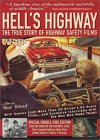
Hell's Highway
Bret Wood has done what Savant didn't think possible, and that's to make a thoughtful, watchable, and worthwhile feature about the notorious true-life gore films of the 50s, 60s and 70s, the highway safety films that showed real auto fatalities, close-up in blood-drenched horror.
Already considered legendary in my high school (in 1970), the films bring into focus the controversy of scare tactics as a psychological tool for motivating people. Wood lets the surviving makers of the films speak for themselves, and keeps a careful lid on the editorializing. What we see plenty evidence of is a bizarre subgenre of intructional film that steps right over a taboo line that fictional films never do - real pain, mutilation, bloody horror and gruesome death.
The docu takes some missteps, but succeeds in approaching a sensational subject without invoking a sleaze factor. It's a serious docu that shows the extreme end of the educational films examined in Driver's Ed., The Educational Archives.
The docu is really the history of the Highway Safety Foundation, which started out as a local Ohio effort by a small group of photographers to document the aftermath of fatal car crashes. Richard D. Wayman saw the need to publicize the horror few people witnessed in person, while championing the cause of the Highway Patrolmen who had to deal with these traumatic wrecks. With official cooperation he began organizing photographers, and then moving up into the realm of 16mm color photography.
The resulting short subjects range from twenty to thirty minutes in length, at least half of which is ghastly wreck footage, often taken before the living or dead victims could be removed from the vehicles. The photography is basic newsreel stuff, repeatedly described as primitive in the docu, but incredibly effective. Stentorian narrators spell out the traffic violations that led to ferocious scenes of mayhem. Cars are crushed, twisted, wrapped around trees and poles; the passengers have been smashed through windshields, mangled or burned alive.
Hell's Highway features interviews with a key maker of the most famous of these films, Earle J. Deems, now an elderly man, along with John R. Domer and policeman John Butler. All of them contribute to an account centering around Wayman of the Highway Safety Foundation), really the only company to make these kinds of pictures until the 1970s. They state their case for the scare film as honestly showing the results of bad driving, drunken driving, speeding, and simple inattentiveness behind the wheel, with the idea that their difficult-to-watch films had beneficial effects.
We also get hindsight opinions from a qualified collector historian, Rick Prelinger, who made a name for himself with this reviewer back in the late 80s with his groundbreaking Voyager/Criterion laser disc compilations he called Ephemeral Films. Prelinger nails the cultural context of 'educational' industrial safety short subjects produced by insurance companies and the factories themselves. In the earlier half of the century they often had an underlying economic motive - to shift responsibility for injuries in unsafe factories from the bosses, back to the employees themselves.
Wayman's highway safety films are shocking now, but must watching one in 1959 must have been incredibly traumatic. They use ominous music to good effect, and the clumsiness of staged events only adds to the reality - there are no actors here, folks. Often worse than the in-your-face closeups of shredded flesh and charred limbs are the audio snippets recorded at the scene - men screaming in pain, an old lady sounding like a shrieking banshee or some kind of animal. It's all there, including full coverage of an accident crew finding a baby's bottle in a wreck from which all the adult corpses had been removed. They roll the car over, and sure enough, find a dead baby underneath. Hell's Highway presents these taboo images just as they were in the original films. Unpleasant as they are, they're the truth and therefore don't carry an exploitative charge.
Prelinger and contributing interviewee Mike Vraney field the question of whether these films were effective as intended, and don't come up with conclusive answers. Everyone admits that common entertainments are so violent now, that they no longer have the same impact as when they were new. Prelinger makes the cogent argument that these films co-opted the familiar establishment view that teen dating and necking and such are somehow responsible for traffic accidents. The frequent Last Date theme shifts a lot of moral guilt onto the crime of just being young. 1
The saving factor is that Wayman and his scare documentarians were sincere do-gooders. If they got their kicks from seeing human suffering, it doesn't show in the films themselves or in their attitudes now. The movies are tough to watch, but not demeaning or sleazy. What we see happens thousands of times a year in the U.S. but isn't part of our normal lives. Gore-hound film fans will flock to this show, but will find something different than they expect. I watched it while my wife was out on the freeway driving home from work, and guess who's safety was on my mind the entire time?
My only objection to the films is their insistence that every one of the accidents we see was caused by gross negligence. The implication is always that breaking traffic laws is a potentially murderous crime (I agree) but the narrators rack up inattentiveness and what must have been tragic mistakes as crimes too. Every person can't be a qualified pilot for a ton of hurling metal, and we now know that cars back then weren't very safe. We see one Corvair ripped in two after losing control braking on the highway ... I drove a Corvair for a year, and I know that in a hit-the-pedal locked-brake situation, the rear-heavy car frequently spun out, like a weighted knife-thrower's blade. With their passenger-conscious construction and the simple addition of safety belts, modern cars are far safer. 2
The docu veers off its own highway for a few minutes in an attempt to tell the full story of the Highway Safety Foundation. In the 60s it branched out into other unorthodox subject matter and lost its way, eventually succumbing to financial disaster in a badly planned Telethon. Few others made this kind of film as it required full police cooperation. We see other kinds of safety films (which in the 70s turned more to using science and crash dummies to get their point across) including a competitor's that added touch-up red paint to death scenes that were insufficiently disturbing.
A digression has the film company helping the police with a vice problem by setting up a camera in a public restroom frequented by homosexual men. The resulting footage ended up showing in local homes (where some of the participants were recognized) and opened a hornet's nest of trouble for the company when the papers charged them with making porno films (which one interviewee attests did happen separately). Hell's Highway fumbles with the issues - the real crime here would seem to be invasion of privacy. The cops use a private company to take surveillance pictures of citizens, and then allow the films to be shown on an exclusive home screening circuit. I don't buy it.
The idea that being in a car crash entitles others to film and exhibit one's dead body also raises some objections. The concept of being displayed after death, whether intact or chopped up, is so humiliating (am I afraid of losing control over myself?) that I wonder about the relatives of the corpses we see - most of the bodies are very recognizable. This grisly death stuff is such an intimate matter, that I'd rather watch it in private.
The docu takes what I think is a real misstep when it shows a few seconds of surveillance footage showing off-topic snippets of real sex activity in the restroom. We're primed for taboo crash footage, not gay sex, and if I was mildly offended, I imagine plenty of viewers who will be outraged. Are there issues of judgment here?
Slightly less offensive is a section on the company's foray into anti- Child Molesting films. Their main short clumsily dramatizes the kidnap and murder of two girls and ends with graphic photos of their bloodied corpses. School authorities showed the film to 6-year-old kids (!!!) and we're given testimony by two brothers, now adults, who admit to having been severely traumatized. Using scare tactics on teenagers is bad enough, but this docu led me to conclude on my own that the basic concept is not a good one, for highway safety or atrocious crime. As sincere as their makers might have been, I don't believe these films were really beneficial.
Hell's Highway: The True Story of Highway Safety Films is a new production apparently shot on film, and the transfers look good. The key footage from the highway gore films is in prime condition, and only some of the other pictures from the Prelinger and Something Weird collections are less than perfect. Audio is mostly good; the interview with Mike Vraney is poorly recorded in a classroom situation. The cover illustration and menu graphics are superb; the critic quote on the cover, "A Lynchian view of the nightmarish underbelly of middle America" is a bid for an intellectual posture that the film scrupulously avoids.
The extras on the second disc give this presentation a heavy dose of attraction/repulsion. The most infamous of the films, the original Signal 30 is here, intact with two others filmed at ten-year intervals. There are also excerpts from 15 other pictures. To quote Gomer Pyle, its a regular kernel copious of taboo highway horror. There are some interview outtakes with content that didn't make it into the film, including policeman Butler's limitless, tearful praise for Richard Wayman, and a gallery of stills that recount the history of the Highway Safety Foundation. 3
How does one define morbid curiosity, and what makes it unhealthy? I've asked myself that many times, as I love many horror films and don't consider myself morbid or a sadist. I found my answer in the Roman Polanski film Repulsion. At the conclusion, Ian Hendry enters a bathroom and catches sight of what we know to be a rotting corpse immersed in bloody bathwater. Hendry immediately flinches, recoils and starts to leave. But instead, he turns slowly around and draws right up close to the body. He has to know, he wants to know the truth of what's there. He doesn't want his mind to imagine horrors later in the form of nightmares. Some things one just has to see with one's own eyes, as they say. When the venue is humanistic and non-exploitative, I'm ready to contemplate horror as well as beauty.
On a scale of Excellent, Good, Fair, and Poor,
Hell's Highway: The True Story of Highway Safety Films rates:
Movie: Very Good, with some misjudged content
Video: Very Good
Sound: Very Good
Supplements: Three complete driver's Ed shorts: Signal 30 (1959), Highways of Agony (1969), Options to Live (1979); excerpts from 15 classroom films, including Mechanized Death, Wheels of Tragedy, Carrier or Killer, Death on the Highway, The Third Killer, and more; deleted scenes, trailers, image galleries
Packaging: 2-disc Keep case
Reviewed: November 1, 2003
Footnotes:
1. I saw one of these films in 1970, I don't know which one. It ended with a shock cut of a man pulling open the door of a wreck, so that a corpse fell forward into the camera. Half of its face, already sliced open, shifted like ice cream falling off a piece of pie. In retrospect, the shot seems a pretty ghoulish misuse of someone's dead body.
The film played for me like a blanket punishment dished out by unfeeling adults. I was deeply affected, but not traumatized, exactly. The audience of teens was marched into an auditorium without a choice and lectured to as if we were already guilty of something. We watched in silence broken by sharp gasps and a couple of short screams. San Bernardino had its sheltered kids and its hood population - this was the brothel of Southern California, as well as being home to a big branch of Hell's Angels.
The sheltered teen girls cringed and wilted at the horrors. It was stupid to show the film to them, as the ones I knew were incredibly responsible drivers. I knew one girl who had a bad injury accident a couple of years later in college, and I'm sure it was not her fault. At the back of the auditorium was a tough crowd that snickered at the gore and mocked the whole attempt to scare them. Maybe they hadn't seen any fatal accidents personally, but they surely considered themselves invulnerable.
I sided with the hoods on one count: for our own good, adults were commiting child abuse with these movies, slamming us with their reactionary morality and guilt-tripping conservatism. The films should have been voluntary and explained in a different context, or not shown at all.
I was deeply impressed by the movie, but it didn't affect my lousy driving habits. Only fast reflexes kept my bad judgment and immature infatuation with Bullitt and James Bond from killing myself behind the wheel.
Return
2. Which is why I wonder sometimes why I feel so good driving my 1966 Mustang, with no shoulder safety belt and a rigid steering wheel pointing three sharp pieces of metal at my chest. So far, every time I've been hit by a newer vehicle, the heavy-gauge 60s car has plowed through the opposition like they were made of tinfoil. But trees and telephone poles scare me; I became a ridiculously safe driver as soon as I had kids. Hell's Highway is definitely good for making one think about these things.
Return
| |
|



| Popular Reviews |
| Sponsored Links |
|
|
| Sponsored Links |
|
|
| Release List | Reviews | Shop | Newsletter | Forum | DVD Giveaways | Blu-Ray | Advertise |
|
Copyright 2024 DVDTalk.com All Rights Reserved. Legal Info, Privacy Policy, Terms of Use,
Manage Preferences,
Your Privacy Choices 
| |||||||