
| Reviews & Columns |
|
Reviews DVD TV on DVD Blu-ray 4K UHD International DVDs In Theaters Reviews by Studio Video Games Features Collector Series DVDs Easter Egg Database Interviews DVD Talk Radio Feature Articles Columns Anime Talk DVD Savant Horror DVDs The M.O.D. Squad Art House HD Talk Silent DVD
|
 DVD Talk Forum |
|
|
| Resources |
|
DVD Price Search Customer Service #'s RCE Info Links |
|
Columns
  



 
|
|
|
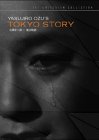
Tokyo Story: Criterion Collection
The Movie
Acclaimed Japanese director Yasujiro Ozu would have been 100 years old this year (he passed away from cancer in 1963), and in celebration of this event a traveling retrospective of Ozu's work is circling the globe. If you have the opportunity, make every conceivable effort to catch this exhibition, as you will be richly rewarded with some of the finest pieces of world cinema ever created. I was able to experience the show last summer in the Czech Republic, as the Karlovy Vary International Film Festival hosted the Ozu retrospective. Although I wasn't able to procure tickets to all of the Ozu films available, I was able to view screenings of I Was Born, But... (Umarete Wa mita keredo...), Record Of A Tenement Gentleman (Nagaya Shinshi Roku), Late Spring (Banshun), Tokyo Story (Tokyo Monogatari), and An Autumn Afternoon (Samma no Aji).
Before Late Spring began, I had struck up a conversation with a rather congenial Russian fellow named Lev, and I had remarked about how much I was absolutely overdosing with delight experiencing so many Ozu classics. There was nothing like enjoying great films projected on a screen in a darkened theater. He turned to me and agreed, saying something along the lines of "Yes, Ozu made such a great film."
Film? As in, singular?
"Yes. He made one great film over and over again and gave them different titles."
Ouch.
Lev might have had a point, albeit a limited one. From his first film, The Sword of Penitence in 1927, to his final work, 1963's An Autumn Afternoon, Ozu directed fifty-four movies in total. Eighteen of them were lost to antiquity, but the thirty-six that remain exhibit such similar recurrences of plot, themes, and characters that it might seem as if Ozu's entire oeuvre was a riff on little more than a handful of elements: the stillness of his camera, tatami-leveled camera placement, thoughtfully composed cinematography, constant crossing and expansion of the "180-degree axis", his predilection for contemplative and often meditative tones, and so forth.
Ozu's work focused primarily on the inner dynamics of the Japanese family, how this foundational unit weathered social pressure, internal strife, external interference, loneliness, suffering, dissolution, and triumph. He re-used characters and situations often: the daughter who doesn't want to marry and the widowed father who must find her a husband, ultimately transferring her impending loneliness onto himself, or the two young brothers who fail to grasp the implications of a world larger, more illogical, and scarier than the one they live in (you could interchange the young boys from I Was Born, But..., Tokyo Story, and Good Morning without missing a beat.) Ozu's later films seemed especially similar to each other: the comical, light-hearted elements and more active cinematography and camera-work found in his earlier movies evolved into a more somber, quiet, and contemplative tone.
I prefer to think of Ozu as a filmmaker by way of a jazz musician. He would take a theme and re-examine it from multiple angles. He would reproduce similar characters and situations, and use the camera eye to reposition them throughout his movies as a stark examination of the natural world. Ozu was especially fond of using an image of movement through stillness in order to evoke an atmosphere of evolution cutting through complacency. He would shoot a simple clothesline swaying in the gentle wind while a lone cyclist rode his way through the background, or a wide static shot of a mountainside as a locomotive made its way across the bottom of a screen. It is as if Ozu was showing us that time and tide would pass and inevitably change that which we viewed as stoic and immutable. Parents grow old and die. Children grow older and gain their own responsibilities. Expectations aren't met. Dreams to which we fervently cling never get fulfilled. Loved ones move out. Ozu demonstrated how life is filled with inherent sadness and tragedy, but that our realization and acceptance of this basic, inevitable reality can become a joyous triumph in and of itself.
Tokyo Story is considered by many to be Ozu's masterpiece. In the esteemed 2002 Sight and Sound poll, film critics ranked Tokyo Story as the fifth greatest film ever made. This intrepid reviewer can't even begin to debate the merits of that particular rating, but there can be no doubt that Tokyo Story is nothing less than a phenomenal film in pretty much every conceivable capacity.
The film's story is fairly straightforward and rather simple to describe. Two elderley parents make a trek to Tokyo to visit the city and spend time with their children and grandchildren. As the story progresses, their adult children find themselves bothered by their parents' arrival, viewing them as a general annoyance and passing the responsibility of spending time with them among each other with an aire of arrogance and ungrateful, indignant self-importance. They are simply "too busy" to look after them. The only one who shows the couple a modicum of kindness and respect is their daughter-in-law, widowed to a son who was killed in World War 2, who has very little to offer them but yet she offers them everything she has.
To say more is probably to say too much, although Tokyo Story is one of the most heart-rending and deeply affecting films I have ever experienced. The film isn't inherently "plot heavy". Events occur and the story progresses to its shattering conclusion, but the film is more about emotions evoked out of the film's simplicity. By modern standards, the film is certainly slow, but it is never "boring" or "pointless." The joys of Tokyo Story, the foundation of its cinematic brilliance are to be found not in its plot, but in its ability to derive truth and heartfelt emotion out of the still, natural moments of real life.
The DVD
Tokyo Story comes in an elegant two-disc keepcase package from the Criterion Collection.
Video:
Tokyo Story is presented in its original full-frame theatrical aspect ratio of 1.33:1. Criterion spent time creating a high-definition digital transfer from a new 35mm print, removing evidence of dirt, debris, and scratches, and restoring the film to a much more impressive state. Unfortunately the original negative was destroyed in a fire, so Criterion's restoration efforts are as close as we're going to get to a pristine, first-generation presentation.
The result is a generally pleasing transfer which, while not without its flaws, looks as good as one could imagine. Indeed, this transfer looks worlds more impressive than any other home video release of Tokyo Story thus far. Due to the film's age and limited source elements, Tokyo Story has its share of film wear, jump cuts, and other print flaws. Contrast and brightness levels are brilliantly rendered, while overall image detail is mixed. I noticed no compression noise, pixelation, or transfer artifacts throughout the film. Given the deterioration of the film's original elements, Tokyo Story certainly looks more than respectable. I found the quality of the video presentation to be inherently flawed but nonetheless impressive to the hilt.
Audio:
Criterion also digitally restored the film's mono soundtrack. The remastered soundtrack was enhanced and restored to reduce hiss, pops, and crackling. The result is pleasing, but like the video it is also problematic. There remains some underlying hiss that permeates the entire presentation. The hiss is never overbearing to the audio presentation. Dialog comes across fairly well if slightly boxy at times. Concessions can be made, as this is fifty-year-old audio that has been digitally improved across the board. The overall presentation is serviceable and generally pleasant, if again limited by flawed source material.
Extras:
This two-disc special edition comes loaded with supplemental material of extremely impressive quality.
Disc One
Ozu-film scholar David Desser has recorded a brand-new, feature-length Audio Commentary that examines Tokyo Story from pretty much every angle. His scholarly and exhaustive comments take a film school approach to the movie, analyzing everything from camera angles, recurring themes, actors, the film's placement within Ozu's entire body of work, plot analysis, and more. Desser is fairly lively and enthusiastic throughout, and the depth of his analysis of the film is very impressive. Also included on this disc is the film's four-minute Original Theatrical Trailer, which I wouldn't review until after you've seen the film for the first time.
Disc Two
Ozu fans will be thrilled to see the inclusion of I Lived, But... (1983), a two-hour documentary that delves into the life and work of the acclaimed Japanese director. The documentary isn't in pristine condition -- Criterion admitted that they spent more of their efforts in restoring Tokyo Story than worrying about how good the documentary looks -- but the presentation, while a little worn, still looks extremely acceptable. But forget about how it looks... I Lived, But... is an amazing journey into Ozu's life and career. There are numerous clips from his various films interspersed with interviews featuring actors, critics, former assistants, and more. This is a fascinating and enjoyable documentary, and it provides a thorough look at the man behind some of the greatest classics of world cinema.
Criterion keeps the documentaries flowin with Talking With Ozu, a forty-minute documentary from 1993 that showcases retrospections on Ozu's work from a cadre of acclaimed international directors, including Stanley Kwan, Aki Kaurismaki, Claire Denis, Lindsay Anderson, Paul Schrader, Wim Wenders, and Hou Hsiao-Hsien. Ozu's works left a lasting impact on these filmmakers, and they eagerly share their thoughts and feelings on Ozu throughout the documentary. While not as totally compelling as the previous documentary, Talking With Ozu is nonetheless an extremely worthwhile and refreshingly candid addition to this DVD. Ozu left a marked imprint on a generation of filmmakers from around the world, and the documentary reverentially reflects his cinematic legacy.
Final Thoughts
Tokyo Story is a magnificent film in and of itself, and to have it restored and released on DVD is simply a joy on its own. Criterion's insistence on going the extra mile with the finest possible presentation of the film, as well as delivering a set of supplemental material that enhances one's appreciation of Ozu and his masterpiece, makes Tokyo Story one of the most impressive DVD releases of the year. Tokyo Story is the type of film that lingers and resonates long after its final frame disappears. It doesn't aim to teach, moralize, deconstruct societal norms, or offer any kind of engaging polemic. Instead, Ozu simply pointed his camera and let his story unfold organically and without adornment, creating an astonishing tale of simple beauty, silent truths, and natural brilliance. Without the slightest scintilla of doubt or hesitation, place Criterion's Tokyo Story DVD at the top of your must-have list.
|



| Popular Reviews |
| Sponsored Links |
|
|
| Sponsored Links |
|
|
| Release List | Reviews | Shop | Newsletter | Forum | DVD Giveaways | Blu-Ray | Advertise |
|
Copyright 2024 DVDTalk.com All Rights Reserved. Legal Info, Privacy Policy, Terms of Use,
Manage Preferences,
Your Privacy Choices 
| |||||||