
| Reviews & Columns |
|
Reviews DVD TV on DVD Blu-ray 4K UHD International DVDs In Theaters Reviews by Studio Video Games Features Collector Series DVDs Easter Egg Database Interviews DVD Talk Radio Feature Articles Columns Anime Talk DVD Savant Horror DVDs The M.O.D. Squad Art House HD Talk Silent DVD
|
 DVD Talk Forum |
|
|
| Resources |
|
DVD Price Search Customer Service #'s RCE Info Links |
|
Columns
  



 
|
|
|
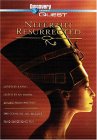
Nefertiti Resurrected
Nefertiti is familiar to modern viewers largely because of the stunning portrait bust of the beautiful queen, but as it turns out, there is potentially a lot more of a story behind Nefertiti than we realized. Nefertiti Resurrected interweaves the story of Egyptologist Dr. Joann Fletcher's research into Nefertiti's role in history with Fletcher's attempt to identify a mystery mummy as Nefertiti herself.
The material itself is intriguing, but the reason that Nefertiti Resurrected doesn't get a higher mark is largely that it's a fascinating 45-minute-long documentary trapped in a 98-minute presentation.
There are two main elements to the documentary: the explanations of Nefertiti's history and possible identity by Dr. Fletcher and other Egyptologists, and the live-action re-enactments of Nefertiti's life. Both elements are puffed up as much as possible. Not only do we hear Dr. Fletcher explain her theories and her research (which is quite interesting), we follow her around like a lost puppy, trailing her as she walks around various sites, or as she takes a look at this or that piece of evidence. Someone must have told her that it's a good thing to be enthusiastic on film... but evidently no one told her that there's such a thing as "too much of a good thing." After a while, listening to Dr. Fletcher enthuse for the umpteenth time about how everything is "Wonderful!" and "Fabulous!" and "Exciting!" and "Thrilling!" moves from the merely annoying to the absurdly comic.
Liberally splashed through the program are the historical re-enactments, which ideally ought to be illustrations of points that the documentary makes, but that here tend to take on a life of their own. The re-enactments are very well done, to be sure; they present a nicely vivid picture of what the ancient Egyptians and their surroundings looked like, and how they behaved. It's just that the sequences are given too much emphasis on their own merits, with too little explanation of what they're supposed to be illustrating.
Oddly enough, the other flaw of Nefertiti Resurrected is how poorly it explains some elements of the program. Throughout the documentary, key bits of information are explained either insufficiently or in a confusing manner, such as the reason why Nefertiti and Akhenaten came into conflict with the priests of Amun, or why the three "mystery mummies" were in a separate chamber and Dr. Fletcher was only allowed a short time with them before they were sealed up again.
Despite its imperfect presentation, Nefertiti Resurrected does present an interesting topic and some fascinating information: as I said, it has about 40 or 45 minutes' worth of solid material. If you're willing to have some patience with the program, or if you haven't seen many other documentaries on ancient Egypt, it's not bad; also in its favor, it does present archaeology as the problem-solving discipline that it is.
The DVD
Video
The Discovery Channel presents Nefertiti Resurrected in a solid widescreen transfer. The image, which is in its original 1.85:1 aspect ratio, is not anamorphically enhanced, so it doesn't have the sharpness of detail that it might have had, but otherwise it looks quite good. The print is in perfect condition, with no flaws or dirt appearing, and colors look natural. Some grain appears in the dimly-lit scenes, but overall the image is fine.
Audio
The Dolby 2.0 soundtrack is more than adequate for this documentary. The voices of Dr. Fletcher and the other interview subjects are generally quite clear, the voiceover narration is always crisp and clean-sounding, and the re-enactment sequences sound good as well.
Extras
Nefertiti Resurrected has an assortment of minor special features, none of them particularly interesting. The bonus section starts out with three trailers for the program, each emphasizing a different aspect of the documentary ("Movie Magic," "Passion," and "Science.").
Next, we get a section called "Explore the Evidence," which consists of an image of the three "mystery mummies" with tags labeling different parts of the scene: the elder woman, the boy, the right arm, the shaved head, the defacement, and the double-pierced ear. Viewers can click on one of the tags to get a text screen with information about that piece of evidence. However, all of these text segments just reiterate information that's presented in the documentary itself.
The "video forensics" section is more substantial. This is a collection of very short featurettes (presented in anamorphic widescreen, incidentally) in which Dr. Fletcher elaborates on various aspects of the three mummies and her theory about Nefertiti: "Three Anonymous Bodies" (1 1/2 minutes), "The Elder Lady" (2 minutes), "The Child," (1 minute), "The Mystery Woman" (3 minutes), "The Identities" (1 1/2 minutes), and "Who Was Nefertiti?" (3 1/2 minutes). These clips are actually more focused than much of what was put into the main feature, with Fletcher focusing on conveying information rather than just enthusing about how great it is, but unfortunately most of what she says overlaps with material that's presented in the main program.
Lastly, we get two trailers for other Discovery programs: James Cameron's Expedition Bismarck and Quest for the Lost Pharaoh.
Final thoughts
If you're interested in ancient Egypt, Nefertiti Resurrected is a good choice as a rental. It's a fluffed-out version of what could have been a very well done short program, but the topic itself has enough value that it's worth watching once. If the material catches your fancy and you want to learn more, you'll want to also check out Egypt's Golden Empire, which includes the reign of Nefertiti and Akhenaten in its presentation.
|



| Popular Reviews |
| Sponsored Links |
|
|
| Sponsored Links |
|
|
| Release List | Reviews | Shop | Newsletter | Forum | DVD Giveaways | Blu-Ray | Advertise |
|
Copyright 2024 DVDTalk.com All Rights Reserved. Legal Info, Privacy Policy, Terms of Use,
Manage Preferences,
Your Privacy Choices 
| |||||||