|
|
| ||||||||||||||||||||||||||||||||||||||||||||||||||||||||||||||||||||||||||||||||||||||||||||||||||||||||||||||||||||||||||||||||||||||||||||||||||||||||||||

|
May 22, 2006
Dragon Head, Kamichu, and Loveless
AnimeTalk a bi-weekly column by Don Houston, John Sinnott, and Todd Douglass Welcome to another installment of Anime Talk. This week we have capsule reviews of the first volume of the Hayao Miyazaki inspired Kamichu, the hilarious second installment of Desert Punk, and the final volume of the magical romance series Ultra Maniac. Holly has some more anime bargains, and this time she's dug through a host of web sites to find the best deals on series sets. There are some great deals on shows you might have missed, so be sure to check them out. We also have more manga reviews, including the dark and eerie Dragon Head and offbeat and unique Loveless. For all this and more, just read on...
The Latest
Anime Reviews:
Henshin a go go baby! Viewtiful Joe is back for his second three episode volume and he's still out there looking for Silvia. This time around he picks up a sidekick in the form of Captain Blue Jr. and even gets a hold of Captain Blue's ship, the Mach Six. These episodes are just about as entertaining as the first batch, but you have to be able to accept the Americanized rendition. There is no original Japanese track available and some of the content appears to have been edited. It's a shame though because this is a series that probably could have gone somewhere special for fans if it was presented in the manner it was meant to be. The violent and fanservice filled romp known as Tenjho Tenge is back for its sixth spin. Maya still finds herself kicked out of school but Souichiro and Bob go to the top to try to get her reinstated. What they find is a world of hurt and later on in the three episodes, yet another flashback. The constant jumping back and forth between present time and the past is kind of getting a little tiresome, but I do have to admit that I'm interested in seeing where it all leads to. Oh, and Aya gets her hands on the evil katana and goes out into the world on her own. Fun stuff especially when you consider that her Dragon Eye power is leading her down the same path as her brother.
Starship Operators is a great example of a show that sounds wonderful on paper, but falters in its execution. The concept of a science fiction war and reality TV news broadcast put together leads the way for a lot of interesting dilemmas. The only problem is that the characters are so generic, the dialogue is so boring, and there is precious little action. This leads to a poorly paced adventure that doesn't really go anywhere in its entire run. All is not lost though. The ending is surprisingly dramatic and the last couple of episodes come together better than the rest of the series had. Young boy detective Shotaro Kaneda was back in the fourth volume of the series with Tetsujin 28 V4: Kyoto Burns. Fans of this retro-styled show will know that he is the son of a WWII Japanese weapons scientist who created a giant robot to protect Japan from the Allied forces. Like the previous volumes of the series, the message was loud and clear that war and weapons leave a lasting impact on the world and those who rely too heavily on them, tying up a few more loose ends but also marking a major turning point in Shotaro's life as all of those around him are ripped out of his life, one by one. Will he be able to stop the schemes of the evil madmen without the use of Tetsujin 28 or will he give up after finding some compelling evidence that suggests his father was a collaborator with the enemy.
Three teenagers play a pivotal role in an ancient prophecy in Kannazuki No Miko: Solar Princess, the first in a short series where modern technology is mixed with popular myth as Himeko, a girl about to enter womanhood on her 16th birthday that is afraid of her own shadow; Chikane, a wealthy young lady with the kind of self assurance and skill that comes only from within; and Souma, a boyfriend of Himeko and moody type who seems drawn towards a different path; are all found facing destiny. The two girls seem to have a very close relationship and their birthday's are just around the corner when all of a sudden, a demon appears out of the morning sky to wreak havoc. This demon dragon is named Orochi and when a solar eclipse appears, we find out that he has found a way to extricate himself from his resting spot on the moon. Generations ago, a group of powerful priests sealed him in there and such powers are handed down genetically. Exactly how they fight the fates to care for one another against all odds had some measure of intrigue although it suffered from borrowing too much from other popular sources. World famous thief Lupin the third was back in Lupin the 3rd : Missed by a Dollar, the latest movie of his exploits to hit the USA. Unlike the smaller scale of the television shows, this one used the backdrop of global economic warfare as a wealthy oil baroness intent on finding the artifact and using it to further her own gains (be it war, weapons, or whatever other aspects would bring in the most profit. Needless to say, when Lupin and company get in her way, she wants them eliminated, using a former KGB operative that isn't known for his charm or social skills. As Lupin gets closer to cracking the code (in Mayan no less), his enemies get closer to him and time starts to quickly run out as each group tries to outmaneuver the other. Thankfully, no one is better at fixing things to work in his favor as Lupin so check out the movie for this latest title distributed by FUNimation.
With the release of The Saga of the Three Kings boxed set, the final story arc in the long running Yu Yu Hakusho anime is collected at last. Previously released on six individual DVDs, this collection gathers those releases together in an attractive box at a greatly reduced price. It's a 'complete your collection' set as Yusuke travels to the Demon Realm that's on the brink of war. If he can't stop the three rulers from fighting each other, the Human Realm will be in as much trouble as the Demon's world. This final story arc works very well and has a pretty good balance of fights to plot development (when compared to the rest of the series.) When all was said and done, it is a little bit sad that the show is over. It has been a great ride. Be sure to take a look at recommendations by DVDTalk's twisted cast of reviewers in their Best Of Anime 2003, Best Of Anime 2004, and Top Ten Anime discs of 2005 articles.
Amazon Slick Catch:
Best Prices Awesome Grab:
(Click on covers to purchase from Amazon.com) Loveless Volume 1:
The art style is very unique and the design of the world and characters instantly separates this series apart from others. It may sound cliché but a big part of Loveless is the inclusion of cat people amidst the population of regular looking folk. The premise here is a little different though. All people are born with cat ears and a tail, but it's known as a sign of innocence more than anything. The feline extremities disappear when you engage in an act of sexual nature and thus you enter adulthood. The main character in the manga is a twelve year old kid named Ritsuka who has just started at a new school. He's not your typical 6th grader though since he carries a heavy burden upon his shoulders. You see, he has lost his memory due to some mysterious events in his past. His brother was murdered and his parents want nothing to do with him. Ritsuka seems lost and adrift with no clue about life until he meets Soubi. Not only is Soubi an adult with kitty body parts but he is also apparently a friend of Ritsuka's dead brother and something known as a "fighter". Another unique part of the Loveless franchise surrounds entities known as fighters and sacrifices. Now, it's not fighting in the way that you think. Soubi engages in combat almost immediately with a pair of fighters that shows up and battles them using words. Though in Ritsuka's case, the most powerful word that Soubi uses is "love". Despite Soubi's age and the fact that Ritsuka is only twelve years old, he professes that he loves the child and it gets uncomfortably intimate at times. There's a certain level of Shota in just about every scene that involves the two, and I have to say I find it creepy. Granted the younger character gets ticked off every time the older one professes his love for him, but still, if you're not prepared for it you may find yourself distanced from the manga. In the end, the first volume of Loveless provided enough intrigue and drama that I'll be back for the next installment. I personally am definitely interested in seeing where the whole fighters thing goes and learning more about that particular world. If you are looking for something to read that is offbeat and unique, look no further than this one. DearS Volume 5
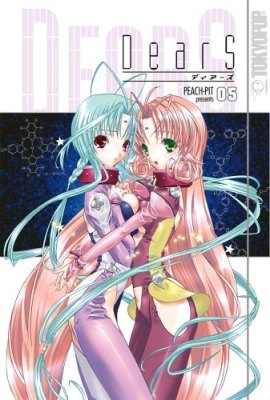
The premise behind the manga form of DearS is identical to the one found in the anime. A year prior to the start of the story a space ship crashed on Earth. The entities that lived in the ship were known as DearS and they basically exist to serve a master. During shipment of some DearS units there is kind of an accident and one is lost and activated prematurely. This fateful even is bound to change the life of Takeya (your average high school student) forever since he stumbles upon the DearS unit known as Ren. Ren quickly moves into his house, calls him master, and causes him a lot of grief. Mostly his torment comes from the fact that he doesn't trust aliens, yet finds it a little too tempting because Ren likes shedding her clothing. Things get more interesting for Takeya as other DearS come into his life, though no quite as prominently as Ren. If you have been reading the manga up to this point (volume 5) then you already know what has transpired. In an effort to not spoil anything for newcomers I won't divulge information particularly to plot lines. In this volume the gang heads to the beach for a little fun. Really though, it seems like a reason to get a few DearS together in bikinis and let them have at it; not that there's anything wrong with that. A strange alien creature crashes into Takeya's apartment and befriends Ren, even though it seems to enjoy latching itself to her head. Tidbits about the DearS society are also discussed such as the different classes of Dogs and Sheep. Reading the manga up to this point has helped flesh out my understanding of the series and has really driven me to go back and check out the anime. It still doesn't really change the way that the show stands up on its own, though I can honestly say that I've been enjoying the manga much more. Check it out if you're looking for something with a lot of naughty jokes, alien mischief, great artwork, and a fun atmosphere. The World Exists for Me Volumes
1 and 2
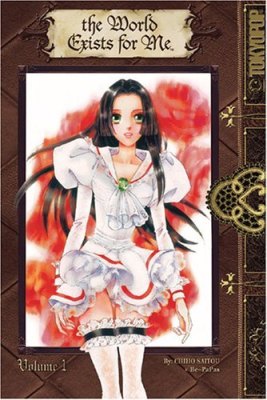
As is told in the introduction, the devil, known simply as "R", gets all of his massive powers from the "Book of S&M" (subtle huh?) One day the book is stolen by a boy who tears it up and makes a pair of dolls, which he names "S" and "M". These two dolls each have half of the unimaginable powers of the book. Sekai Maihime is coming home from a school field trip when the train crashes and everyone is killed. She would have died too, except a mysterious boy, Sovieul, transports her back in time just before the disaster with the aide of his doll, "S". Now Sekai finds herself in 17th Century France, in the time of the Sun King, suspected of plotting against the king's life. As if that wasn't enough of a problem, Machiavello turns up. He looks exactly like Sekai's childhood friend and secret love Midou, and he tries to seduce, and when that fails rape, the young girl. Machiavello has a jewel implanted into his chest, as does Sekai, and if they have sex he'll be able to gain her power. Whatever it is. So Sekai starts playing a game of hide-and-seek through time with Sovieul and S at her side, and with Machiavello pursing them. Though I was looking forward to this series, I ended up being less than impressed. The art was solid with nice character designs and some lovely panel designs, but the story is a bit confusing and there's nothing that reels the reader in. Sekai is a passive heroine, she doesn't do much and only reacts to what's happening around her. On top of that, she doesn't really as if she's been flung hundreds of years into the past. Her main worry is getting back to Midou, and every time she encounters Machiavello she thinks he is her love, even though he's tried to rape her. The fact that Midou won't be born for another couple of hundred years apparently hasn't entered her brain yet. With no characters that are sympathetic, a plot that is more confusing than it is engaging, and a story that has no real direction, this manga doesn't have a lot of drawing power. These first two volumes have set up the story nicely, and the plot is advancing at a nice pace but its just hard to care where it's going. Dragon Head Volumes 1 and 2
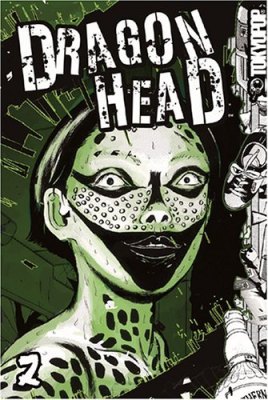
Aoki Teru wakes up aching and in the dark. No one answers his calls, and when he lights a match, he discovers he's surrounded by dead bodies. The last thing he remembers is returning from a school field trip by train and going into a tunnel. While inside the tunnel, the train jumped the tracks, overturn\ed, and everyone was killed. Exploring a little, Teru finds that both ends of the tunnel have been caved in and are totally impassable. Being alone and in the dark with dozens of dead bodies is bad enough, but things actually get worse when Teru discovers a pair of other survivors. He discovers a young girl, Seto, unconscious and bleeding, but Nobou Takashi is the main concern. This young boy is terrified of the dark, and their hopeless situation starts to effect him in very bad ways. As the hours turn to days, and the days into weeks, the children start to run out of food. The temperature in the tunnel starts to rise too, leading the kids to think that something bad has happened in the outside world and the hope of rescue fades. The temperature also causes the dead bodies of the children's classmates to begin to rot, but Nobou doesn't leave the train like Teru and Seto. He likes staying with the bodies and has started painting his body with their blood. This is not only one of the scariest manga I've ever read, it's also one of the best to come along in a long time. Psychologically dark and disturbing, this series is one that will keep you on the edge of your seat. The dark and cramped art helps give the manga a very claustrophobic feel which adds to the eeriness. Owing more than a little to William Golding's Lord of the Flies, this story questions how civilized someone would be if removed from civilization and how fragile the human psyche is. A creepy, dreadful and haunting book, it is also very intriguing and will leave you wanting more. The third volume is due on July 11th, and I can't wait.
What do you think about the column? Like what you see?
Don't like it? Have a comment or suggestion? Drop us an e-mail
and let us know!
May 08, 2006
Nanaka 6/17, Kingdom Hearts and Kami Kaze manga
AnimeTalk a bi-weekly column by Don Houston, John Sinnott, and Todd Douglass This week's Anime Talk is packed full of information. First off
we have a contest where ten (!) lucky readers will
win copies of Patlabor: The Movie courtesy
of Image Entertainment. This is the limited edition version too,
will all the cool extras! Not stopping there, we're adding a new
regular
feature. The response to our recent manga
reviews has been so positive that we're going to continue to cover
them from now on. This week we have a look at some of TokyoPop's
most recent manga releases including Kingdom
Hearts and Kami Kaze. This
week we also have one of the largest groups of anime reviews
that we've ever had. There are capsule reviews of the conclusion
of Scrapped Princess and Baki the Grappler as well as collected
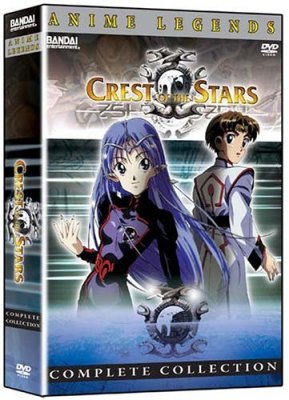
sets of Crest of the Stars, Galaxy Angels A, and
Saber Marionette
J. Holly Beeman has her Anime
Bargain section once again, and she also has an early
review of Nanaka 6/17, an amusing comedy where a seventeen year
old high school student gets whacked on the head and forgets everything
that's happened to her since she was six. Our tables
of upcoming releases rounds out this packed installment.
What do you think? Like what you see? Don't like it? Have a comment or suggestion? Drop us an e-mail and let us know!
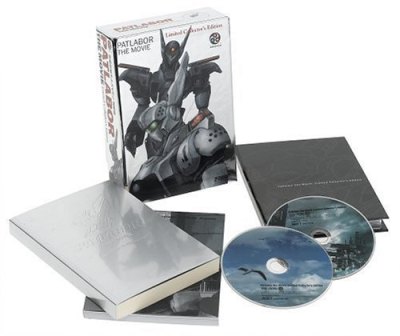
Image Entertainment has kindly provided us with copies of their newly released edition of the anime classic Patlabor: The Movie to give away. Ten lucky winners, chosen at random, will receive a copy of the limited edition, which retails for nearly $90 and is limited to only 10,000 copies. This two-disc set includes the newly restored version of the movie, ample bonus features, and two books! Be sure to read Don Houston's review of the disc for some exclusive images of the extra material. How to enter? Nothing could be simpler! Just click on this Patlabor Contest Link and fill in your vital statistics. The contest is limited to people living in the United States and Canada. You must be 18 years of age or older to enter, and only one entry per person. All entries must be received by May 14th, 2006. See entry form for complete rules and details.
The Latest
Anime Reviews:
Fantastic Children also caught our eye as a group of immortal children search for the missing link to a mysterious plan that was as yet undescribed. The pacing was a lot slower than usual and from the looks of it, the story is going to have a lot of you initially shaking your heads but then provide replay value as many smaller clues are laid before the viewer to figure out exactly what is going on in this near-future tale of intrigue. With the basic background laid, we’re hoping the adventures of Helga, Thoma, and Chitto pick up the pace a little as the trio makes their daring escape from the clutches of a headmaster scheming towards some unknown goal while the two secret groups search for the missing girl that can uncover an ages old mystery. 300 years ago when the Mesopotamia spaceship crash landed on a barren planet there were only 6 survivors; all men. Through the technology of cloning and a lot of perseverance they were able to turn a bleak, hopeless situation into a thriving civilization. Unfortunately with the way their technology was structured they were unable to create female clones. Instead they crafted androids known as Marionettes for companionship and to be something pretty to look at. Fast-forward to the future and a young kid named Otaru stumbles upon three Marionettes with “maiden circuits” who have personalities and extreme powers. The Saber Marionette series was popular back in the 90s and with good reason. The characters are interesting and the show is a lot of fun, even if the premise feels somewhat generic as a sci-fi harem comedy. Check it out if you enjoy stuff like Tenchi Muyo.
Cowboy Bebop Remix is the audio enhanced version of the anime classic that has probably led to more people into the world of anime in the past ten years (or longer) than any other series that comes to mind. Led by Spike Spiegel and Jet Black, the team of futuristic bounty hunters takes on mission after mission in order to pay the bills and put food in their stomachs. With Volume 3 and Volume 4 of the series now out, those of you who have been living under a rock for the last decade can catch up on some of the team’s history as well as watch the evolution of a simply fantastic show. The musical themes of the series have received relatively scant attention over the years in favor of the flashy writing, homages to many pop culture references of the past, and excellent character exposition but each episode is crafted with the kind of care and replay value that made these volumes worth a double dip. After finishing a major story arc in the previous volume, the sixth installment of Kodocha takes a break and presents four stand alone episodes that are mainly played for laughs. This delightfully off beat series is surprisingly funny and very enjoyable. Though it's a shojo series the show can appeal to a very wide range, anyone who enjoys a good laugh. Last year, we got a look at a show called Mars Daybreak V1, a futuristic combination of 20,000 Leagues Under the Sea and Robin Hood set on the red planet. The seas of the terraformed Mars are full of numerous city ships, all governed by the local authorities under the direction of an arrogant Earth leadership. Well, with Volume 2, Volume 3, Volume 4, and Volume 5, we now find out that the bulk of the story deals with a treasure hunt for some priceless Martian artifacts. Now an invaluable member of the team, Gram Rivers is somehow tied to the quest by virtue of a pendant he has worn since birth, and the crew risks it all to combat other pirates on top of the government; all of whom are seeking the mysterious prize. With only one more volume to go, look for the conclusion of the action packed series by watching these episodes first.
One of the longest running road trip series was the subject of a couple of reviews this time with the late season 3 volume of Saiyuki Reload 6 and the fourth season opener Saiyuki Reload Gunlock 1. The main characters are still the same quartet of guys heading west to India on a mission to stop the resurrection of an evil god with the only real difference being the dub cast switch up as Geneon took over the franchise from ADV Films. The Sanzo Party continued to make the little side trips off the beaten path to vanquish erstwhile priests, out of control demons, and hordes of ill wishing people that would get in their way so aside from some minor background details, you can almost pick up anywhere in the series and not be completely lost. In a future when lost technology poses the greatest threat to mankind, Lt. Colonel Volcott leads a team consisting of Milfeulle, Mint, Forte, Vanilla, and Ranpha in Galaxy Angel A: Complete Collection as they reunite to save the day again and again. The hilarious antics were short on fan service but high on the kind of silly action that fans have come to expect of the group, typically the younger female crowd to be precise. Each episode was about half as long as your typical show but with three discs crammed to the brink with 26 episodes, a bonus episode, and concert footage by the Japanese voice actresses, this is as good as it gets for those of you seeking value in your season sets. Just keep in mind that it’s okay if the show doesn’t always make sense or follow a linear plot and you’ll be okay. With the conclusion of the wonderful Planetes, fans of action, adventure, and intrigue may find solace in Stratos 4: Complete Collection; a story about a team of meteor sweepers from the future who save the Earth from large chunks of interstellar matter reining down on the planet. There was some minor fan service here too but the main draw of the show was the storyline that showed Mikaze Honjo overcome her self doubts in order to take command and save the day from a plot that goes far beyond the mindless hunks of rock hurling through the atmosphere. In an interesting bit of casting, the dub used former pop star Stacy Q as one of the leads, showing that Bandai was thinking outside the box (and hopefully will use such people more fully in the future).
Unlike Yukikaze, one anime show that doesn't have much going for it is Dandoh. This golf based show features the title character who manages to be great at golf, not through hard work and constant practice, but through a lot of inborn talent. With unrealistic plays and stereotypical characters the program glosses over the rules and terminology of the game and may be a bit confusing for viewers not familiar with the game. Aimed at younger viewers, it tries to teach fair play and the value of friendship. Because of this, there's not as much drama or suspense as one would expect. This is one to rent.
Winding down to the last of the unreleased Dragon Ball Z animations, Viz has released the second to last Dragon Ball Z movie: Fusion Reborn. This is the twelfth movie to be based on Akira Toriyama's classic adventure series, and it's a fun romp. In this adventure, a careless worker in the realm of the dead accidentally causes an explosion that lets the dead back into the world of the living. It's up to Gohan, Videl, Trunks and Goten to take care of the dead (including Hitler) while Son Goku and Vegeta tackle the monster that's been created in the afterlife. Though there's not a lot of substance to it, this film is an enjoyable way to kill an hour. With the sucsses of several anime shows broadcast on TV aimed at young boys (such as the aforementioned Dragon Ball Z), its only natural that more and more would find their way to region one. The latest such program is The Law of Ueki. It involves a group of young teens that are battling with fantastic powers, with the winner gaining amazing abilities. It sounds a lot like Shaman King, and it is very similar, but the powers that the children wield are really strange. Ueki, for example, can change garbage into trees. While this does add a fun element to the show, it's not enough to really make the show entertaining. This children's program is a battle-of-the-week show that, while not bad, doesn't have much to recommend it.
Another highly recommended series is Scrapped Princess. Volumes five and six wrap up the story of Pacifica Cassul, the poison that will destroy the world. These last two installments of the fantasy series wraps up the story in a very satisfactory manner, explaining just who and what Pacifica is, what will happen when she turns sixteen, and why. An entertaining program that was quite rewarding to watch. The latest volume of Baki the Grappler has hit the streets with more bulging muscle and physical abuse than you can shake a stick at. Baki is still on his quest to destroy his father, but before that can happen he has to get his butt kicked yet again. It seems that Baki is never going to be strong enough to take on his dad, though a new challenger faces Yujiro who just might be. The series keeps chugging along at its own pace with a lot more fighting and new warriors tossed into the mix. The sixth volume was another fun installment that fans of the show will love. Be sure to take a look at recommendations by DVDTalk’s twisted cast of reviewers in their Best Of Anime 2003, Best Of Anime 2004, and Top Ten Anime discs of 2005 articles.
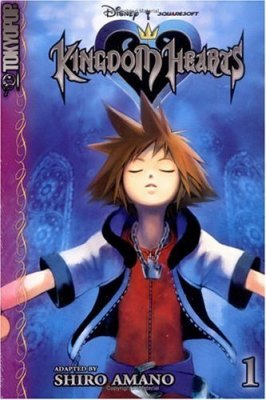
Kingdom Hearts Vols 1-3:
If, for some reason, you do happen to live under a rock and you don’t know what Kingdom Hearts is all about, let me fill you in. The game’s plot takes place in a universe where Square-Enix characters (from the Final Fantasy series) and Disney characters (from the movies) co-exist. At the center of the story are three children named Sora, Riku, and Kairi who all live on a mysterious island. One day as they are about to set out for sea to get away from their solitary island a huge storm hits. This isn’t any ordinary storm though. Creatures known as the Heartless attack the trio and Sora is left to battle them. During the thick of it all Sora is given a weapon known as the Keyblade while Riku and Kairi are swallowed by the darkness. When the dust clears Sora finds himself in a completely different world known as Traverse Town. He isn’t alone for long though since Donald and Goofy come across him on their quest to find King Mickey. I’m not going to spoil the story for you considering that I’ve read through the first three volumes, but after the three characters meet, they team up to search for Sora’s friends and Mickey. This involves them traveling to other worlds like Agrabah, Atlantis, and Wonderland in order to seal those world’s keyholes and save the many princesses. Throughout the three volumes the story follows the events of the first Kingdom Hearts video game to the letter. There are no surprises what so ever and frankly, that’s a bad thing. I was hoping for some deviation or maybe a side story or just something different than the story I saw four years ago. Sadly, that wasn’t the case. The Kingdom Hearts manga also reads from left to right, which breaks the rules of traditional Japanese manga. This Americanized approach is a no-no when it comes to manga purists, but to be honest it doesn’t really affect the readability of the material. One thing that does affect the readability of the material however is the sometimes stiff translation and placement of the panels. In manga (and comic books) the most important factor in telling your story is the fluidity of the artwork and dialogue. Sadly while I was reading this particular series I found that the panels jumped around too much. Characters would often go a few panels without referencing something that happened on the last page. It didn’t affect the story itself really, just the enjoyment of the book. To me, at least, it felt a little haphazard compared to other manga I’ve read, but that could have something to do with the source material. Overall though, for a $5.99 price point the Kingdom Hearts manga
is very affordable. The fourth volume is still a couple of months away
so there’s plenty of time to track these ones down if you’re interested.
I can’t quite figure out who the target audience for the book is though.
I played the original game and am familiar with the story so reading the
manga feels like I’m experiencing a re-run. On the other hand if you want
to play Kingdom Hearts 2 and haven’t tried the first one, then the
manga would be a good place to start to fill in the blanks.
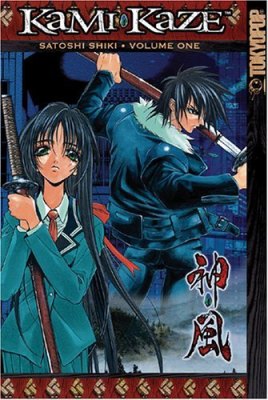
Kami Kaze Volume 1:
Misao Mikogami is a typical teenage high school student. Though she's orphaned and living with a group of nuns, she seems normal in every way. Except for when it rains. Then she will stare out into the falling water for hours, looking at the shapes and images she sees projected in the downpour. This is because she is "the girl of water" a special person who has an affinity for an element. She has no idea that she's anyone important though, or that she has extraordinary powers. Or that a group of people are looking to capture her. One evening Misao is attacked in her convent by a trio of unusual people with special fighting abilities, including a friend from her school, Aiguma. They want to capture her in order to release the 88 Beasts, a group of demons that have been imprisoned for 1000 years. Flying to her defense is Ishigami Kamuro, a mysterious individual who is the Man of Earth. Kamuro is a fierce fighter who can anticipate his rivals moves, an ability that he attributes to the stone he wears around his neck, a rock that he was clutching in his hand when he was born. A member of the Matsurowanu Kegai No Tami Clan, Kamuro has vowed to protect Misao so that the Beasts can't be resurrected. Though the premise, two groups fighting over a young powerful girl who doesn't realize her potential, isn't exactly new the well paced and plotted execution makes this manga very enjoyable. The book has a good amount of violence, and just a bit of sex, to give the story some punch, but it's the characters that really bring the reader in. Aiguma is a loner and outsider who everyone at her school thinks is scary and dangerous, and she's truly disturbed when she finds out that she may have to kill the only person who was ever kind to her. The most interesting person is Kamuro who is a cipher. His fighting ability is stunning, but his drive to save Misao, while not caring if anyone else gets killed, is odd. This mysterious character has never been defeated, and when someone walks up and bests him without breaking a sweat, readers are instantly hooked. The first volume of this series weighs in at a hefty 264 pages and is
a great introduction to the series. Written and drawn by Satoshi Shiki
who has also drawn a number of hentai comics, this title is rated "older
teen 16+" for good reason. It contains nudity and adult situations,
as well as severed arms and heads, but not to excess. If you're old
enough to handle the occasional bloody fights and even rarer sexual situations,
the first volume of this manga is highly recommended.
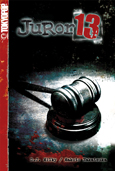
Juror 13:
Jeremy Rosen is an insurance investigator who is having some problems. His knock-out girlfriend has dumped him (how he ever rated a girl like her in the first place is a mystery that's never answered) and his boss is always on his case. His best friend and co-worker Jake is acting strange too. Jake's spending money like crazy, more than he could ever hope to make, and has suddenly gotten very protective of some of his case files. When Jeremy gets suspicious, he sneaks a peek in Jake's office only to discover that his name has been forged on falsified claims. Could Jake really be setting up Jeremy? If so, why? American comics have the reputation of being unimaginative and cliched, and this book lives up to that reputation. This story with an easy to see twist ending might have been accepted for an early 70's issue of Unexpected, but how it was published in this day and age is the biggest mystery of all. The characters are all idiotic and nearly every action that occurs is ludicrous. A good example (of many) is when Jeremy goes back to Jake's office to get the proof that he's being framed (why didn't he take it in the first place??) the files are gone. He tears the office apart looking for the proof that will clear him until Jake walks in. Jake yells at Jeremy, calls him a dick, and then Jeremy apologies to the man he knows is framing him and helps him clean up the office. What?!?! In heaven's name why? He's sorry he tried to clear his name?? Things just spiral out of control after that with Jeremy doing one asinine thing after another until the predictable ending. While I won't give away the ending, suffice to say that the totally irrational things that Jeremy does clues the readers in as to how this will all be resolved. The ending itself, after the twist has been revealed, doesn't make much sense either if you think about it. An all around poor effort that will only convince reader as to the inferiority of American made comics.
Something
to Look Forward To
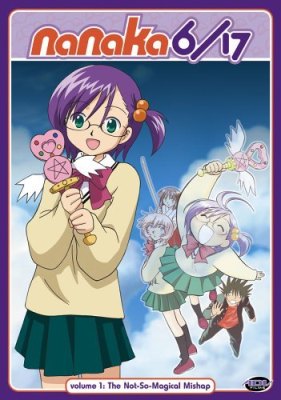
Nanaka 6/17
From director Hiroaki Sakurai of Cromartie High School and the producers of Azumanga Daioh comes the charming new show Nanaka 6/17. While not necessarily epic in the realm of anime, Nanaka is filled with laughs and even moments that are likely to touch one's heart. The first installment of this 13-episode series shows a lot of promise and gives one much to look forward to in the volumes to come. Nanaka is a 17-year old high school student who is suffering from what her doctor terms "regression": Her mental state has regressed back to her younger years, particularly to the age of six. How could something like this have happened?
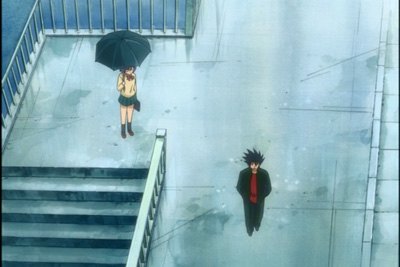
Episode 1 - Nanaka Kirisato, 6 Years Old: Before the accident, Nanaka Kirisato is considered to be somewhat of a self-centered, stuck-up high school student whose only concern is the college exam. Because of this, she and her childhood friend Nenji Nagihara have grown apart exponentially. Their exchanges are few and far between and consist largely of Nanaka nagging at Nenji to grow up, take better care of himself, and stop getting into fights so frequently. On one rainy day in particular, Nanaka and Nenji get into an argument of epic proportions, one that is to end their friendship. This leads to the so-called "accident"; Nanaka falls down a flight of stairs and hits her head, ultimately causing her regression.
After a glimpse into Nanaka's childhood, we learn that her mother passed away when she was only six-years old. Nenji, knowing that her favorite anime is Magical Domiko, convinces her that with magic, she can grow up and not have to be sad anymore. Well, this certainly comes in handy when Nanaka awakens because it serves to explain why she and Nenji look the way they do. The magic actually worked! They are now adults! Even her dad has grown older (maybe a little too much, according to Nanaka). While her father is naturally concerned, he is also given the unforeseen pleasure of being needed once more and seeing his only daughter grow up all over again. He and Nenji had forgotten just how cute and innocent Nanaka could be; she had grown distant from the two of them probably due to her mother's death ocurring when she was at such an early age. Her relationship with Nenji is also renewed as he makes a vow to protect and watch over her in this seemingly foreign world. Episode 2 - Nanaka the Pianist: Little Nanaka, full of hopes and dreams, decides she wants to be all of the professions that Magical Domoki was in her show, namely a pianist. When her classmate Yuriko Amemiya (who happens to be really great at playing the piano) announces that they need a pianist for the upcoming choral performance, much to everyone's shock and dismay (remember, Nanaka is hardly popular among her fellow classmates), Nanaka raises her hand with enthusiasm. The only problem is, she has no experience with the piano! Yuriko is thoroughly annoyed. She assumed that no one would volunteer, and as a result, she would be the natural candidate to do the job. Nevertheless, she sees an opportunity to exploit Nanaka and offers to give her "special lessons" after class. Harmless, right? Not quite. At school, Yuriko appears to be giving Nanaka ordinary piano lessons, especially in front of Nenji. However, behind the scenes at her home, she is much harder on Nanaka. Here, Yuriko uses these extracuricular practice sessions to try and wear Nanaka down, but what she does not expect is Nanaka's refusal to give up. In fact, one day after school, she finds Nanaka in the piano room working on the choir piece, harder than ever. So hard that her fingers are bleeding. Yuriko then remembers her childhood and how she loved playing the piano so much that the same thing happened to her. This experience indirectly inspires Yuriko to pursue her long lost dream of being a pianist like her mother.
The choral performance arrives, and while the class nominated Yuriko to play after realizing that Nanaka could not cut it, we see little Nanaka on the stage. Just prior to this, Yuriko advises her to play a little of the Magical Domiko theme to warm up. She does, and everyone is petrified at first, but Nanaka manages to pull through and surprise them with a more than decent and heartwarming performance. Episode 3 - Nanaka the Big Sister: Before Nanaka's transformation, Nenji was getting into fights on a regular basis, particularly with a boy named Jinpachi Arashiyama. One day, they got into the ultimate showdown in which the loser had to cut his hair in the same style as the winner. Needless to say, Jinpachi lost and had to cut his hair like "Raging Hair Nenji"! Confusion is bound to occur when Nanaka's glasses fall off and a truck runs them over subsequently. Looking around for help, she sees Jinpachi across the street; without clear vision, he appears to be Nenji-chan! Nanaka runs up to him, and soon after, he is suckered into treating Nanaka throughout the day. How can he say no to such a cute little girl?
More trouble arises when Jinpachi's sister Satsuki witnesses him rapidly turning into putty. Nanaka is not worthy of being the wife to the future head of the Arashiyama family. Satsuki must dispose of her! Through Nanaka's clumsiness, she manages to avoid all of Satsuki's determined attacks. In her final attempt, Satsuki almost harms herself inadvertently, but Nanaka trips and pushes her out of the way. Satsuki sees this as an admirable gesture of protecting the enemy. She is so touched that she asks Nanaka to be her big sister, a title which Nanaka happily accepts. Episode 4: Not included on this screener. I think the mixture of humor and seriousness works well for this series; these two elements do not really work independently of each other, but moreso in concert. The story is actually not one I have experienced in the form of anime before, and while not the most original work I have seen, its predictability does not take away from the strength of the show. I would actually probably be disappointed if it turned out otherwise. The animation is not extremely elaborate, but for a series like this, I do not really consider this an issue. The best part of the show for me was being able to relate to the characters. Seeing little Nanako interact with her father, Nenji, and others really made me think about the prospect of having children. I know that sounds incredibly cheesy, but it really was just a pleasure to watch. Nanako successfully serves as a testament to childhood and growing up. The DVD: Audio: Using the technique of DVDTalk reviewer
and Anime Talk editor
John Sinnott, I alternated between the Japanese 2.0 and English 5.1 tracks,
both of which I enjoyed equally. The English 5.1 track features such recurring
voices as Chris Patton and Monica Rial, making it easily enjoyable. The
Japanese 2.0 track, while not having the same sound capabilities of a 5.1
track, is still very good especially in an anime like this where surround
sound is not an absolutely crucial component.
Video: Nanaka is presented in its original 4:3 or 1.33:1 full frame
aspect ratio. It looks clear and crisp, particularly nice for an unfinished
product. The use of soft colors for the backgrounds contrasting with the
bright colors of the characters and animation is suitable for this kind
of anime. Overall, the transfer looks great, and everything is clean and
easy on the eyes.
Extras: Minimal in extras like most anime discs, this volume includes a clean
opening animation and clean closing animation (not included on the screener)
as well as a Magical Domiko music video, DVD credits, and ADV previews
for UFO
Ultramaiden Valkyrie, Michel, Super
GALS!, Happy
Lesson, Sister
Princess, and Moburaho.
Final Thoughts: Nanaka is a light-hearted and downright fun to watch anime. It has an exceptional blend of both funny and serious moments. At some points, my eyes even got a little watery, but then again, that is not saying a whole lot considering how much of a sap I can be! I can understand why it might not appeal to everyone, but in my opinion, it is definitely worth a watch. I am psyched to see the final product in addition to the series in its entirety. Recommended.
What do you think about the column? Like what you see? Don't
like it? Have a comment or suggestion? Drop us an e-mail
and let us know!
Archives
|
| ||||||||||||||||||||||||||||||||||||||||||||||||||||||||||||||||||||||||||||||||||||||||||||||||||||||||||||||||||||||||||||||||||||||||||||||||||||||||||
| ||||||||||||||||||||||||||||||||||||||||||||||||||||||||||||||||||||||||||||||||||||||||||||||||||||||||||||||||||||||||||||||||||||||||||||||||||||||||||||

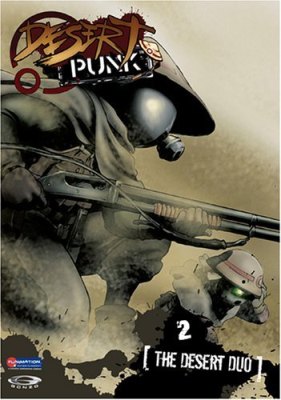 Mercenary
Kanta Mizuno was back in another hilarious episode where his futuristic
survival skills were pitted not only against a superior force by a group
of his customers that betray him in
Mercenary
Kanta Mizuno was back in another hilarious episode where his futuristic
survival skills were pitted not only against a superior force by a group
of his customers that betray him in 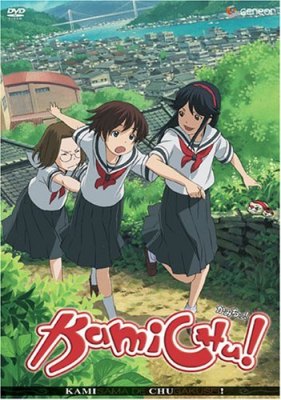 Geneon
is releasing another magical girl show, but this one has a difference.
In
Geneon
is releasing another magical girl show, but this one has a difference.
In 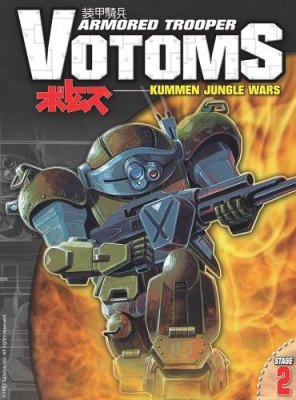
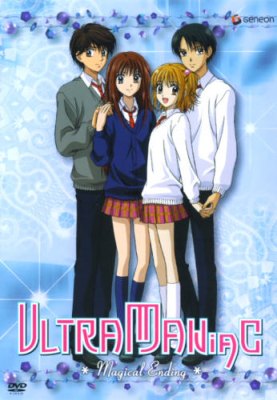 The
final volume of the magical romance series
The
final volume of the magical romance series 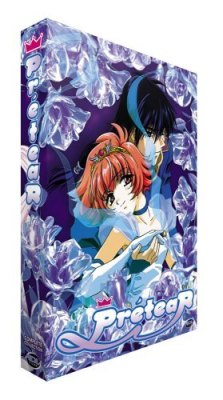

 On
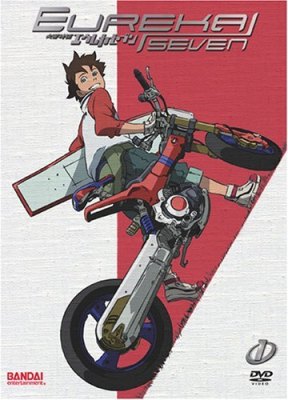
a colonized planet far away, a 14 year old Renton Thurston dreams of an
adventurous life in
On
a colonized planet far away, a 14 year old Renton Thurston dreams of an
adventurous life in  Preaching
that the lessons of war are lost on humanity,
Preaching
that the lessons of war are lost on humanity, 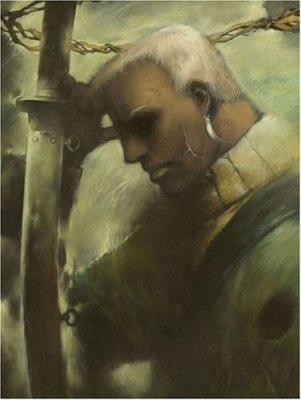 FUNimation
once again struck gold with the release of their premium edition
FUNimation
once again struck gold with the release of their premium edition 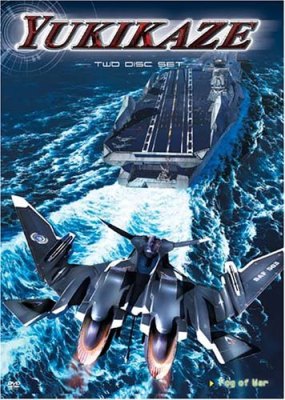 Nearly
two years after the release of the first DVD, the second volume of
Nearly
two years after the release of the first DVD, the second volume of  Fan
service shows about school girls with magical powers are pretty old hat.
It seems that a new one of these comes out like every year and in the 90s
the world of anime was booming with them. Fortunately though,
Fan
service shows about school girls with magical powers are pretty old hat.
It seems that a new one of these comes out like every year and in the 90s
the world of anime was booming with them. Fortunately though,
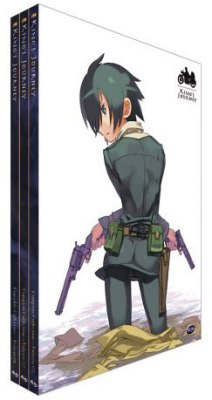
 An
excellent show that has managed to fly under a lot of people's radar is
An
excellent show that has managed to fly under a lot of people's radar is
 Check
Out Your Local Best Buy for:
Check
Out Your Local Best Buy for: